
Here’s the thing about scaling a business: you need more coordination, but you can’t afford more overhead. It’s like trying to conduct an orchestra that keeps growing while your budget for conductors stays flat. Most founders face this exact dilemma when their teams hit 10, 20, or 50 people suddenly, everyone’s stepping on each other’s toes, deadlines are slipping, and the person who should be leading strategy is drowning in status updates and timeline adjustments.
The traditional solution? Hire a local project manager for $80K-$120K annually, plus benefits, plus office space, plus the three-month ramp-up period where they’re still figuring out your systems. But what if there’s a smarter way to get the coordination you need without the crushing overhead that comes with it?
Enter offshore project managers skilled professionals who can keep your teams aligned, your projects on schedule, and your budgets intact. But here’s what most people get wrong: they think offshore project management is about finding someone cheap to handle busy work. In reality, it’s about finding experienced professionals who can manage complex projects while working seamlessly within your existing structure.
Let’s break down exactly how offshore project managers eliminate the coordination chaos without adding the overhead burden that kills so many growing companies.
The Hidden Cost of Poor Project Coordination

Before we dive into solutions, let’s be real about what’s actually happening when teams lack proper project management. It’s not just missed deadlines though those hurt. The real damage happens in the spaces between tasks.
Your senior developer spends two hours in meetings that could’ve been a five-minute Slack update. Your marketing manager creates a campaign that doesn’t align with the product roadmap because nobody communicated the timeline shift. Your customer success team promises a feature that engineering deprioritized three weeks ago.
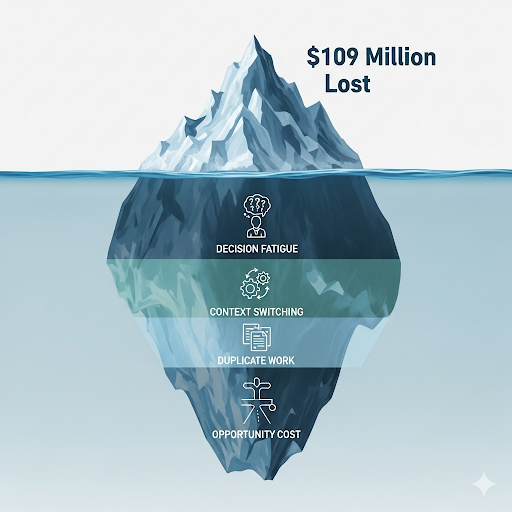
According to the Project Management Institute, organizations lose $109 million for every $1 billion invested due to poor project performance. But that’s just the measurable stuff. The hidden costs are even worse:
- Decision fatigue hitting your leadership team because every small coordination issue lands on their desk
- Context switching as team members jump between projects without clear priorities
- Duplicate work when teams aren’t aligned on deliverables and timelines
- Opportunity cost of senior staff handling administrative coordination instead of strategic work
Most founders don’t realize they’re bleeding money this way until they hit a growth plateau and can’t figure out why productivity isn’t scaling with headcount. The team gets bigger, but output per person actually decreases because coordination overhead grows exponentially.
What Makes Offshore Project Managers Different
The first thing to understand is that effective offshore project managers aren’t just order-takers or task trackers. They’re strategic coordinators who understand how to keep complex projects moving without constantly pulling leadership into the weeds.
Deep Process Integration
Unlike freelancers or temporary contractors, offshore project managers from established providers integrate directly into your existing workflows. They learn your tools, understand your company culture, and adapt to your communication style. Within the first week, they should feel like an extension of your core team, not an outsider managing from a distance.
This means they can make tactical decisions about priorities, resource allocation, and timeline adjustments without escalating every small issue to founders or department heads. They become the operational backbone that keeps projects flowing smoothly.
Proactive Communication Management
Here’s where offshore project managers really shine: they excel at managing communication across time zones and work styles. While your U.S. team is ending their day, your offshore PM is already preparing tomorrow’s priorities, reviewing overnight progress, and identifying potential blockers.
This creates a natural rhythm where problems get flagged and addressed before they impact your core team’s productivity. Instead of starting each day with crisis management, your leadership team starts with clear visibility into project status and upcoming decisions that actually need their attention.
Cost-Effective Expertise
The math here is compelling. A skilled offshore project manager typically costs 60-70% less than a comparable U.S. hire, but that’s just the salary portion. When you factor in benefits, payroll taxes, office space, equipment, and training costs, the total savings often exceed 70%.
But here’s the key: you’re not sacrificing quality for cost savings. Many offshore project managers have extensive experience with U.S. companies and understand the standards and expectations that come with that market. They’ve often worked with larger organizations than your current company, bringing enterprise-level process knowledge to smaller, growing teams.
How Offshore Project Managers Streamline Operations
The real value of offshore project management isn’t just coordination it’s systematic optimization of how work gets done. Here’s how experienced offshore PMs tackle the most common operational challenges:
Standardizing Project Workflows
Most growing companies have inconsistent project management across different teams. Marketing runs projects one way, engineering follows a completely different process, and sales operates in ad-hoc mode. An offshore project manager brings consistency without forcing rigid bureaucracy.
They’ll analyze your current workflows, identify the most effective elements from each team, and create standardized processes that actually make sense for your specific business. This isn’t about implementing some cookie-cutter methodology it’s about finding the right balance of structure and flexibility for your unique situation.
The result? New projects launch faster because everyone knows the process. Handoffs between teams happen smoothly because expectations are clear. Status updates become meaningful because they follow consistent formats and timing.
Managing Cross-Team Dependencies
This is where offshore project managers really prove their worth. They become the central nervous system that tracks how different teams’ work impacts each other. When engineering changes a timeline, the offshore PM immediately identifies which marketing campaigns, sales commitments, and customer success initiatives need to be adjusted.
Instead of these dependencies creating chaos and emergency meetings, they become manageable coordination points that get addressed systematically. Your offshore PM maintains the master view of how everything connects, so your department heads can focus on execution within their areas of expertise.
Creating Visibility Without Micromanagement
Nobody wants to feel micromanaged, but everyone needs visibility into project progress. Offshore project managers excel at creating the right level of transparency for different stakeholders.
Leadership gets high-level dashboards showing overall project health, budget status, and upcoming decision points. Individual contributors get detailed task management and clear priorities. Clients or other external stakeholders get polished updates that reflect well on your organization’s professionalism.
This layered communication approach means everyone gets the information they need without drowning in irrelevant details or feeling like they’re being watched too closely.
Real-World Implementation: What It Actually Looks Like
Let’s walk through a typical scenario to see how offshore project management works in practice. Imagine you’re a 30-person SaaS company launching a major product update while simultaneously expanding your marketing efforts and onboarding new enterprise clients.
Week 1: Your offshore project manager starts by conducting stakeholder interviews with team leads from engineering, marketing, sales, and customer success. They’re not just gathering task lists they’re understanding priorities, identifying potential conflicts, and mapping out dependencies between different workstreams.
Week 2-3: They create a master project timeline that shows how the product launch impacts marketing campaign timing, how new feature training needs to happen before the sales team pitches enterprise prospects, and how customer success needs to prepare support documentation before launch.
Ongoing: Every morning, your offshore PM reviews overnight progress, identifies emerging issues, and prepares a daily briefing that takes your leadership team five minutes to consume but gives them complete visibility into project status. When issues arise, they’re flagged early with proposed solutions, not just problems.
The key difference? Your founders and department heads spend their time making strategic decisions and handling exceptions, not tracking task completion and managing routine coordination. The offshore PM handles the operational layer that keeps everything moving smoothly.

The Economics of Offshore Project Management
Let’s talk numbers, because that’s ultimately what matters for growing businesses. A mid-level project manager in most U.S. markets costs between $80K-$120K in base salary. Add benefits (typically 20-30% of salary), payroll taxes, office space, equipment, and training costs, and you’re looking at $120K-$180K in total annual investment.
An offshore project manager with comparable experience and skills typically costs $25K-$40K annually, all-inclusive. That’s not just salary that includes the provider’s management overhead, compliance handling, and ongoing support.
But here’s what really matters: the ROI calculation. That $100K+ in savings isn’t just money back in your pocket it’s money you can reinvest in growth initiatives, product development, or additional team members who directly contribute to revenue.
More importantly, the productivity gains from better coordination often exceed the direct cost savings. When your senior staff spends less time on administrative coordination, they can focus on the strategic work that actually moves the business forward. When projects run smoother, you can take on more clients or ship features faster. When communication flows better, customer satisfaction improves.
Common Concerns and How to Address Them
“What about time zone differences?” This is actually often an advantage, not a problem. Your offshore PM can prepare overnight, address issues that arise during off-hours, and have everything ready for your team’s morning. Many companies find this creates better project momentum because work continues around the clock instead of stopping at 5 PM.
“How do we ensure quality control?” The key is working with providers who specialize in long-term team integration rather than short-term contracting. Look for companies that have rigorous vetting processes, provide ongoing management support, and treat placements as partnerships rather than transactions.
“What if they don’t understand our industry?” Industry knowledge can be taught much faster than project management skills and work ethic. A skilled PM with experience in cross-functional coordination can learn your specific business context within weeks, but developing strong project management capabilities takes years.
“How do we maintain company culture?” Integration is crucial here. Your offshore PM should participate in team meetings, understand company values, and communicate in ways that align with your culture. This requires intentional onboarding and ongoing connection, not just task assignment.
Building Your Offshore Project Management Strategy
Successfully implementing offshore project management isn’t just about finding someone to track tasks. It requires a strategic approach that aligns with your specific growth goals and operational challenges.
Define Clear Success Metrics
Before you bring on an offshore project manager, get crystal clear about what success looks like. Is it shorter project timelines? Better communication between teams? Reduced escalations to leadership? Higher on-time delivery rates? Having specific, measurable goals helps you evaluate performance and optimize the working relationship.
Invest in Proper Onboarding
The first 30 days are crucial. Your offshore PM needs to understand not just what you do, but how you do it and why. This means access to strategic discussions, not just tactical task lists. The upfront investment in comprehensive onboarding pays dividends in long-term effectiveness.
Create Feedback Loops
Regular check-ins aren’t just about project status they’re about continuous improvement of the working relationship. What processes are working well? Where are there still friction points? How can communication be optimized? Treating the offshore PM as a strategic partner rather than a service provider leads to much better outcomes.
Plan for Growth
Your offshore PM should understand where the company is headed, not just where it is today. This forward-looking perspective allows them to build processes and systems that scale with your growth rather than becoming bottlenecks later.
The Strategic Impact on Business Growth
When project management is handled effectively offshore, it creates ripple effects throughout your organization that go far beyond just better task tracking. Leadership bandwidth gets freed up for strategic initiatives. Team members experience less frustration and higher productivity. Client relationships improve because delivery becomes more predictable and professional.
But perhaps most importantly, it creates operational scalability. Instead of coordination complexity increasing exponentially as you add team members, good project management keeps complexity linear and manageable. This means you can grow faster without hitting the operational walls that stop so many companies at 25, 50, or 100 employees.
The companies that figure this out early gain a significant competitive advantage. While their competitors are struggling with coordination challenges and burning leadership bandwidth on administrative tasks, they’re executing faster, delivering more consistently, and reinvesting their savings into growth initiatives.
Conclusion: Making Project Management a Growth Engine
The question isn’t whether you need better project coordination as you scale the question is how you’re going to achieve it without killing your margins or burning out your leadership team. Offshore project managers offer a proven path to professional-grade project coordination at a fraction of the traditional cost.
But success requires more than just cost savings. You need skilled professionals who can integrate with your team, understand your business context, and handle complex coordination challenges independently. You need providers who treat placements as long-term partnerships rather than short-term contracts.
Most importantly, you need to think of project management as a strategic investment in operational scalability, not just an administrative necessity. When done right, offshore project management doesn’t just keep teams on track it accelerates growth by eliminating the coordination bottlenecks that slow down most scaling companies.
The math is compelling: 70% cost savings, higher productivity, better delivery consistency, and freed-up leadership bandwidth. But the real value is strategic building operational infrastructure that scales with your ambitions rather than limiting them.
Frequently Asked Questions
What’s the typical timeline for an offshore project manager to become fully productive? Most offshore project managers are contributing meaningfully within the first week and fully integrated within 30 days, assuming proper onboarding and clear role definition.
How do you handle sensitive or confidential project information? Reputable offshore providers have strict security protocols, including NDAs, secure communication channels, and compliance frameworks that often exceed what smaller companies implement internally.
Can offshore project managers work with our existing tools and processes? Yes, experienced offshore PMs are typically familiar with standard project management tools (Asana, Monday.com, Jira, etc.) and can adapt to your specific workflows and communication preferences.
What happens if the working relationship isn’t a good fit? Quality providers offer replacement guarantees and will work with you to find a better match rather than leaving you stuck with an unsuitable placement.
How do we measure ROI on offshore project management? Track metrics like project delivery times, leadership time spent on coordination tasks, team productivity measures, and client satisfaction scores. Most companies see measurable improvements within 60-90 days.
Ready to eliminate project coordination chaos without the overhead burden? Citrus Teams specializes in placing skilled offshore project managers who integrate seamlessly with your existing team and processes. Our vetted professionals have extensive experience managing complex projects for U.S. companies, and we handle all the sourcing, screening, and ongoing support so you can focus on growing your business.
Get ready-to-work project management talent within 5-7 business days, backed by our partnership approach that ensures long-term success. Learn more about building your offshore project management team with Citrus Teams.
Leave a Reply