Category: Uncategorized

  • The Hidden Cost of Keeping Insurance Admin In-House

    The Hidden Cost of Keeping Insurance Admin In-House

    Every month, Sarah watches her insurance agency’s profit margins shrink. Her team of five administrative staff members processes claims, handles policy renewals, and manages customer inquiries, but the numbers don’t add up anymore. What used to be a profitable operation now feels like an expensive game of whack-a-mole, where every efficiency gain gets eaten up by rising labor costs, training expenses, and administrative overhead.

    If this sounds familiar, you’re not alone. Insurance agencies across the country are discovering that keeping administrative functions in-house isn’t just expensive – it’s becoming unsustainable. Let’s break down the real costs hiding in your operational budget and explore why smart agency owners are making the switch to offshore administrative teams.

    The True Price Tag of In-House Insurance Administration

    Direct Labor Costs: Just the Tip of the Iceberg

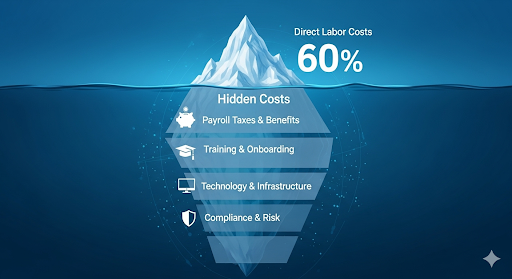
    When most agency owners calculate their administrative costs, they focus on salaries. A full-time insurance administrative assistant in the U.S. typically earns between $35,000 and $50,000 annually, depending on experience and location. But here’s the thing – that base salary is only about 60% of your actual cost per employee.

    Factor in payroll taxes, health insurance, 401(k) matching, workers’ compensation, and other benefits, and you’re looking at $50,000 to $70,000 per administrative role. For a mid-sized agency with three administrative staff members, that’s $150,000 to $210,000 annually before we even talk about the hidden costs.
    citrusteams.com

    Training and Onboarding: The 90-Day Money Pit

    Insurance administration isn’t something you can learn overnight. New hires typically need 60 to 90 days to become productive, and during that period, you’re paying full wages while getting minimal output. The training process itself requires your experienced staff to dedicate time they could spend on revenue-generating activities.

    Consider this: if you’re paying a new administrative hire $20 per hour during their three-month training period, that’s roughly $10,000 in wages alone. Add the opportunity cost of your senior staff spending 20% of their time training instead of closing deals or managing high-value accounts, and you’re looking at another $15,000 to $20,000 in lost productivity.

    citrusteams.com

    Technology and Infrastructure Overhead

    Each in-house administrative employee needs a workstation, software licenses, and ongoing IT support. Insurance management systems, customer relationship management tools, and compliance software can easily cost $200 to $500 per user per month. Don’t forget about the physical office space, utilities, and equipment maintenance either.

    A single administrative workstation costs approximately $3,000 to set up and maintain annually when you factor in hardware, software, and support. Multiply that by your team size, and the numbers start getting uncomfortable.

    The Compliance and Risk Management Burden

    Insurance is a heavily regulated industry, and keeping staff compliant isn’t cheap. Continuing education requirements, licensing fees, and regulatory training consume both time and money. The average insurance professional needs 15 to 30 hours of continuing education annually, depending on their role and state requirements.

    More importantly, compliance mistakes can be catastrophic. A single error in claims processing or policy documentation can result in regulatory fines, legal issues, or client losses that far exceed your annual administrative budget. The pressure to maintain perfect compliance while managing costs creates a constant tension that keeps many agency owners up at night.

    The Hidden Productivity Killers

    Multi-Tasking Madness

    In-house administrative staff often wear multiple hats by necessity. Your claims processor might also handle customer service calls, policy renewals, and filing. While this seems efficient on paper, research shows that task-switching reduces productivity by up to 40%. When your administrative team is constantly juggling different responsibilities, nothing gets done at peak efficiency.

    Geographic Talent Limitations

    Your local talent pool determines your hiring quality, and let’s be honest – not every market has abundant skilled insurance administrators. Small and mid-sized cities especially struggle with limited talent availability, forcing agencies to either compromise on quality or overpay for mediocre performers.

    This geographical constraint also affects retention. If a better opportunity opens up across town, your trained administrative staff can walk away, taking their knowledge and leaving you back at square one with recruitment and training costs.

    Scalability Nightmares

    Growing your business shouldn’t feel like scaling Mount Everest, but in-house administrative teams make expansion complicated. Adding one new administrative role requires months of recruitment, training, and integration. During busy seasons, you can’t quickly scale up support, and during slow periods, you’re stuck with fixed labor costs regardless of workload.

    What Smart Agencies Are Doing Instead

    The Offshore Administrative Solution

    Forward-thinking insurance agencies are discovering that offshore administrative teams offer a compelling alternative to traditional hiring. By partnering with specialized providers, agencies can access skilled administrative professionals at a fraction of local costs while maintaining quality and compliance standards.

    Offshore administrative team members typically cost 60% to 70% less than their U.S. counterparts when you factor in all-in costs. More importantly, they come pre-trained in insurance processes and ready to integrate into existing workflows within days, not months.

    Quality Without Compromise

    The biggest concern agencies have about offshore administrative support is quality. Here’s what many don’t realize: offshore insurance administrative professionals often have more specialized training and experience than local hires. Many have worked with multiple U.S. agencies, understand various insurance management systems, and maintain current knowledge of compliance requirements.

    Professional offshore providers handle the vetting, training, and quality assurance processes that would normally consume your internal resources. Instead of hoping your local hire works out, you get access to pre-screened professionals with proven track records in insurance administration.

    Built-in Redundancy and Coverage

    Unlike in-house staff who can call in sick, take vacations, or quit unexpectedly, professional offshore administrative teams provide built-in coverage. If your primary administrative team member is unavailable, trained backup professionals can step in seamlessly, ensuring your operations never skip a beat.

    This redundancy eliminates the single-point-of-failure risk that keeps many agency owners stressed about key employee departures or illnesses.

    The Numbers Don’t Lie: A Real-World Comparison

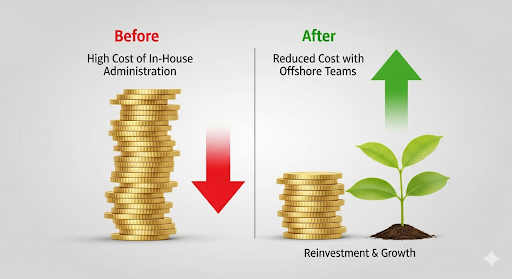
    Let’s look at a practical example. Midwest Insurance Agency was spending $180,000 annually on three in-house administrative staff members, plus approximately $25,000 in training, technology, and overhead costs. Their total administrative cost was $205,000 per year.

    After transitioning to an offshore administrative team, their costs dropped to $75,000 annually for equivalent coverage, with better availability and specialized expertise. The $130,000 annual savings allowed them to invest in business development, technology upgrades, and client service improvements that drove revenue growth.

    More importantly, the agency owner could finally focus on strategic initiatives instead of managing administrative headaches and compliance concerns.
    citrusteams.com

    Making the Transition: What to Expect

    Immediate Cost Relief

    The financial impact of switching to offshore administrative support is typically visible within the first month. You’ll see immediate savings in payroll, benefits, and overhead costs, plus elimination of recruitment and training expenses for future hires.

    Improved Operational Efficiency

    Offshore administrative professionals often bring process improvements and best practices learned from working with multiple agencies. Don’t be surprised if your new team identifies inefficiencies in your current workflows and suggests optimizations that save additional time and money.

    Enhanced Scalability

    Need to handle a sudden influx of claims or policy renewals? Offshore teams can scale up quickly without the long lead times associated with traditional hiring. During slower periods, you can adjust capacity without the guilt and expense of laying off local employees.

    Better Work-Life Balance

    Many agency owners report that transitioning administrative functions offshore gives them their evenings and weekends back. When you’re not constantly worried about staffing issues, training schedules, and administrative compliance, you can focus on the strategic aspects of growing your business.

    Common Concerns and How to Address Them

    “What About Communication and Time Zones?”

    Modern offshore administrative teams work during U.S. business hours and use the same communication tools your in-house team would use. Video conferencing, project management software, and instant messaging make collaboration seamless, regardless of physical location.

    “Can They Really Understand Our Industry?”

    Professional offshore providers specialize in insurance administration and invest heavily in training their teams on U.S. insurance practices, compliance requirements, and industry software. Many offshore administrative professionals have more focused insurance experience than generalist local hires.

    “What About Data Security?”

    Reputable offshore providers maintain SOC 2 compliance, use encrypted communication channels, and follow strict data handling protocols that often exceed what small agencies implement internally. Your client data is typically more secure with professional offshore providers than on local desktop computers.

    The Strategic Advantage of Offshore Administrative Teams

    Keeping insurance administration in-house made sense when labor costs were lower and compliance requirements were simpler. Today’s reality demands a different approach. Agencies that cling to traditional staffing models find themselves spending more on administration while delivering less value to clients.

    Smart agency owners recognize that administrative functions, while essential, don’t require local presence to be effective. By transitioning these roles to specialized offshore professionals, agencies can redirect resources toward revenue-generating activities, client relationship building, and strategic growth initiatives.

    The question isn’t whether you can afford to make this transition – it’s whether you can afford not to. Every month you delay is another month of inflated costs, limited scalability, and missed opportunities to reinvest in your agency’s growth.

    Taking the Next Step

    The insurance industry is evolving rapidly, and agencies that adapt quickly will have significant competitive advantages. By 2025, agencies still relying entirely on expensive in-house administrative staff will find themselves at a severe cost disadvantage compared to competitors who’ve embraced offshore solutions.

    Don’t let administrative overhead continue draining your profitability and limiting your growth potential. The transition to offshore administrative support is easier than most agency owners expect, and the benefits compound over time.

    Ready to cut your administrative costs by 70% while improving efficiency and scalability? Citrus Teams specializes in building offshore administrative teams specifically for insurance agencies. Our pre-trained professionals integrate seamlessly into your existing workflows, handle compliance requirements, and provide the reliability you need without the overhead you can’t afford.

    Schedule a consultation today to learn how other insurance agencies are using offshore administrative teams to boost profitability and accelerate growth. Your competitors are already making this transition – don’t get left behind.


  • How Offshore Project Managers Keep Teams on Track Without Adding Overhead

    How Offshore Project Managers Keep Teams on Track Without Adding Overhead


    Here’s the thing about scaling a business: you need more coordination, but you can’t afford more overhead. It’s like trying to conduct an orchestra that keeps growing while your budget for conductors stays flat. Most founders face this exact dilemma when their teams hit 10, 20, or 50 people suddenly, everyone’s stepping on each other’s toes, deadlines are slipping, and the person who should be leading strategy is drowning in status updates and timeline adjustments.

    The traditional solution? Hire a local project manager for $80K-$120K annually, plus benefits, plus office space, plus the three-month ramp-up period where they’re still figuring out your systems. But what if there’s a smarter way to get the coordination you need without the crushing overhead that comes with it?

    Enter offshore project managers skilled professionals who can keep your teams aligned, your projects on schedule, and your budgets intact. But here’s what most people get wrong: they think offshore project management is about finding someone cheap to handle busy work. In reality, it’s about finding experienced professionals who can manage complex projects while working seamlessly within your existing structure.

    Let’s break down exactly how offshore project managers eliminate the coordination chaos without adding the overhead burden that kills so many growing companies.

    The Hidden Cost of Poor Project Coordination

    citrusteams.com

    Before we dive into solutions, let’s be real about what’s actually happening when teams lack proper project management. It’s not just missed deadlines though those hurt. The real damage happens in the spaces between tasks.

    Your senior developer spends two hours in meetings that could’ve been a five-minute Slack update. Your marketing manager creates a campaign that doesn’t align with the product roadmap because nobody communicated the timeline shift. Your customer success team promises a feature that engineering deprioritized three weeks ago.

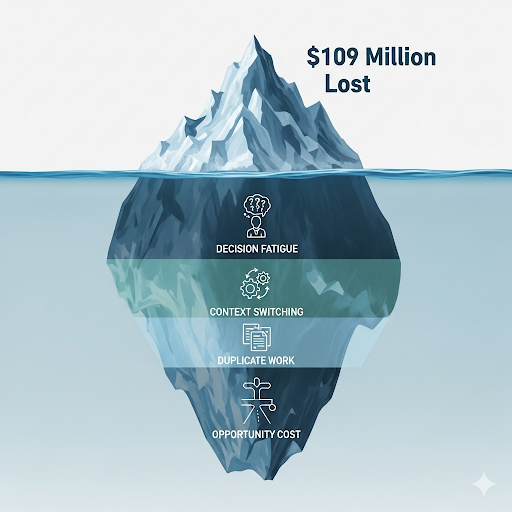
    According to the Project Management Institute, organizations lose $109 million for every $1 billion invested due to poor project performance. But that’s just the measurable stuff. The hidden costs are even worse:

    • Decision fatigue hitting your leadership team because every small coordination issue lands on their desk
    • Context switching as team members jump between projects without clear priorities
    • Duplicate work when teams aren’t aligned on deliverables and timelines
    • Opportunity cost of senior staff handling administrative coordination instead of strategic work

    Most founders don’t realize they’re bleeding money this way until they hit a growth plateau and can’t figure out why productivity isn’t scaling with headcount. The team gets bigger, but output per person actually decreases because coordination overhead grows exponentially.

    citrusteams.com

    What Makes Offshore Project Managers Different

    The first thing to understand is that effective offshore project managers aren’t just order-takers or task trackers. They’re strategic coordinators who understand how to keep complex projects moving without constantly pulling leadership into the weeds.

    Deep Process Integration

    Unlike freelancers or temporary contractors, offshore project managers from established providers integrate directly into your existing workflows. They learn your tools, understand your company culture, and adapt to your communication style. Within the first week, they should feel like an extension of your core team, not an outsider managing from a distance.

    This means they can make tactical decisions about priorities, resource allocation, and timeline adjustments without escalating every small issue to founders or department heads. They become the operational backbone that keeps projects flowing smoothly.

    Proactive Communication Management

    Here’s where offshore project managers really shine: they excel at managing communication across time zones and work styles. While your U.S. team is ending their day, your offshore PM is already preparing tomorrow’s priorities, reviewing overnight progress, and identifying potential blockers.

    This creates a natural rhythm where problems get flagged and addressed before they impact your core team’s productivity. Instead of starting each day with crisis management, your leadership team starts with clear visibility into project status and upcoming decisions that actually need their attention.

    Cost-Effective Expertise

    The math here is compelling. A skilled offshore project manager typically costs 60-70% less than a comparable U.S. hire, but that’s just the salary portion. When you factor in benefits, payroll taxes, office space, equipment, and training costs, the total savings often exceed 70%.

    But here’s the key: you’re not sacrificing quality for cost savings. Many offshore project managers have extensive experience with U.S. companies and understand the standards and expectations that come with that market. They’ve often worked with larger organizations than your current company, bringing enterprise-level process knowledge to smaller, growing teams.

    How Offshore Project Managers Streamline Operations

    The real value of offshore project management isn’t just coordination it’s systematic optimization of how work gets done. Here’s how experienced offshore PMs tackle the most common operational challenges:

    Standardizing Project Workflows

    Most growing companies have inconsistent project management across different teams. Marketing runs projects one way, engineering follows a completely different process, and sales operates in ad-hoc mode. An offshore project manager brings consistency without forcing rigid bureaucracy.

    They’ll analyze your current workflows, identify the most effective elements from each team, and create standardized processes that actually make sense for your specific business. This isn’t about implementing some cookie-cutter methodology it’s about finding the right balance of structure and flexibility for your unique situation.

    The result? New projects launch faster because everyone knows the process. Handoffs between teams happen smoothly because expectations are clear. Status updates become meaningful because they follow consistent formats and timing.

    Managing Cross-Team Dependencies

    This is where offshore project managers really prove their worth. They become the central nervous system that tracks how different teams’ work impacts each other. When engineering changes a timeline, the offshore PM immediately identifies which marketing campaigns, sales commitments, and customer success initiatives need to be adjusted.

    Instead of these dependencies creating chaos and emergency meetings, they become manageable coordination points that get addressed systematically. Your offshore PM maintains the master view of how everything connects, so your department heads can focus on execution within their areas of expertise.

    Creating Visibility Without Micromanagement

    Nobody wants to feel micromanaged, but everyone needs visibility into project progress. Offshore project managers excel at creating the right level of transparency for different stakeholders.

    Leadership gets high-level dashboards showing overall project health, budget status, and upcoming decision points. Individual contributors get detailed task management and clear priorities. Clients or other external stakeholders get polished updates that reflect well on your organization’s professionalism.

    This layered communication approach means everyone gets the information they need without drowning in irrelevant details or feeling like they’re being watched too closely.

    Real-World Implementation: What It Actually Looks Like

    Let’s walk through a typical scenario to see how offshore project management works in practice. Imagine you’re a 30-person SaaS company launching a major product update while simultaneously expanding your marketing efforts and onboarding new enterprise clients.

    Week 1: Your offshore project manager starts by conducting stakeholder interviews with team leads from engineering, marketing, sales, and customer success. They’re not just gathering task lists they’re understanding priorities, identifying potential conflicts, and mapping out dependencies between different workstreams.

    Week 2-3: They create a master project timeline that shows how the product launch impacts marketing campaign timing, how new feature training needs to happen before the sales team pitches enterprise prospects, and how customer success needs to prepare support documentation before launch.

    Ongoing: Every morning, your offshore PM reviews overnight progress, identifies emerging issues, and prepares a daily briefing that takes your leadership team five minutes to consume but gives them complete visibility into project status. When issues arise, they’re flagged early with proposed solutions, not just problems.

    The key difference? Your founders and department heads spend their time making strategic decisions and handling exceptions, not tracking task completion and managing routine coordination. The offshore PM handles the operational layer that keeps everything moving smoothly.

    citrusteams.com

    The Economics of Offshore Project Management

    Let’s talk numbers, because that’s ultimately what matters for growing businesses. A mid-level project manager in most U.S. markets costs between $80K-$120K in base salary. Add benefits (typically 20-30% of salary), payroll taxes, office space, equipment, and training costs, and you’re looking at $120K-$180K in total annual investment.

    An offshore project manager with comparable experience and skills typically costs $25K-$40K annually, all-inclusive. That’s not just salary that includes the provider’s management overhead, compliance handling, and ongoing support.

    But here’s what really matters: the ROI calculation. That $100K+ in savings isn’t just money back in your pocket it’s money you can reinvest in growth initiatives, product development, or additional team members who directly contribute to revenue.

    More importantly, the productivity gains from better coordination often exceed the direct cost savings. When your senior staff spends less time on administrative coordination, they can focus on the strategic work that actually moves the business forward. When projects run smoother, you can take on more clients or ship features faster. When communication flows better, customer satisfaction improves.

    Common Concerns and How to Address Them

    “What about time zone differences?” This is actually often an advantage, not a problem. Your offshore PM can prepare overnight, address issues that arise during off-hours, and have everything ready for your team’s morning. Many companies find this creates better project momentum because work continues around the clock instead of stopping at 5 PM.

    “How do we ensure quality control?” The key is working with providers who specialize in long-term team integration rather than short-term contracting. Look for companies that have rigorous vetting processes, provide ongoing management support, and treat placements as partnerships rather than transactions.

    “What if they don’t understand our industry?” Industry knowledge can be taught much faster than project management skills and work ethic. A skilled PM with experience in cross-functional coordination can learn your specific business context within weeks, but developing strong project management capabilities takes years.

    “How do we maintain company culture?” Integration is crucial here. Your offshore PM should participate in team meetings, understand company values, and communicate in ways that align with your culture. This requires intentional onboarding and ongoing connection, not just task assignment.

    Building Your Offshore Project Management Strategy

    Successfully implementing offshore project management isn’t just about finding someone to track tasks. It requires a strategic approach that aligns with your specific growth goals and operational challenges.

    Define Clear Success Metrics

    Before you bring on an offshore project manager, get crystal clear about what success looks like. Is it shorter project timelines? Better communication between teams? Reduced escalations to leadership? Higher on-time delivery rates? Having specific, measurable goals helps you evaluate performance and optimize the working relationship.

    Invest in Proper Onboarding

    The first 30 days are crucial. Your offshore PM needs to understand not just what you do, but how you do it and why. This means access to strategic discussions, not just tactical task lists. The upfront investment in comprehensive onboarding pays dividends in long-term effectiveness.

    Create Feedback Loops

    Regular check-ins aren’t just about project status they’re about continuous improvement of the working relationship. What processes are working well? Where are there still friction points? How can communication be optimized? Treating the offshore PM as a strategic partner rather than a service provider leads to much better outcomes.

    Plan for Growth

    Your offshore PM should understand where the company is headed, not just where it is today. This forward-looking perspective allows them to build processes and systems that scale with your growth rather than becoming bottlenecks later.

    The Strategic Impact on Business Growth

    When project management is handled effectively offshore, it creates ripple effects throughout your organization that go far beyond just better task tracking. Leadership bandwidth gets freed up for strategic initiatives. Team members experience less frustration and higher productivity. Client relationships improve because delivery becomes more predictable and professional.

    But perhaps most importantly, it creates operational scalability. Instead of coordination complexity increasing exponentially as you add team members, good project management keeps complexity linear and manageable. This means you can grow faster without hitting the operational walls that stop so many companies at 25, 50, or 100 employees.

    The companies that figure this out early gain a significant competitive advantage. While their competitors are struggling with coordination challenges and burning leadership bandwidth on administrative tasks, they’re executing faster, delivering more consistently, and reinvesting their savings into growth initiatives.

    Conclusion: Making Project Management a Growth Engine

    The question isn’t whether you need better project coordination as you scale the question is how you’re going to achieve it without killing your margins or burning out your leadership team. Offshore project managers offer a proven path to professional-grade project coordination at a fraction of the traditional cost.

    But success requires more than just cost savings. You need skilled professionals who can integrate with your team, understand your business context, and handle complex coordination challenges independently. You need providers who treat placements as long-term partnerships rather than short-term contracts.

    Most importantly, you need to think of project management as a strategic investment in operational scalability, not just an administrative necessity. When done right, offshore project management doesn’t just keep teams on track it accelerates growth by eliminating the coordination bottlenecks that slow down most scaling companies.

    The math is compelling: 70% cost savings, higher productivity, better delivery consistency, and freed-up leadership bandwidth. But the real value is strategic building operational infrastructure that scales with your ambitions rather than limiting them.


    Frequently Asked Questions

    What’s the typical timeline for an offshore project manager to become fully productive? Most offshore project managers are contributing meaningfully within the first week and fully integrated within 30 days, assuming proper onboarding and clear role definition.

    How do you handle sensitive or confidential project information? Reputable offshore providers have strict security protocols, including NDAs, secure communication channels, and compliance frameworks that often exceed what smaller companies implement internally.

    Can offshore project managers work with our existing tools and processes? Yes, experienced offshore PMs are typically familiar with standard project management tools (Asana, Monday.com, Jira, etc.) and can adapt to your specific workflows and communication preferences.

    What happens if the working relationship isn’t a good fit? Quality providers offer replacement guarantees and will work with you to find a better match rather than leaving you stuck with an unsuitable placement.

    How do we measure ROI on offshore project management? Track metrics like project delivery times, leadership time spent on coordination tasks, team productivity measures, and client satisfaction scores. Most companies see measurable improvements within 60-90 days.


    Ready to eliminate project coordination chaos without the overhead burden? Citrus Teams specializes in placing skilled offshore project managers who integrate seamlessly with your existing team and processes. Our vetted professionals have extensive experience managing complex projects for U.S. companies, and we handle all the sourcing, screening, and ongoing support so you can focus on growing your business.

    Get ready-to-work project management talent within 5-7 business days, backed by our partnership approach that ensures long-term success. Learn more about building your offshore project management team with Citrus Teams.

  • Why SDRs Are the First Offshore Hire for Growing Companies

    Why SDRs Are the First Offshore Hire for Growing Companies

    Every growing company hits the same wall: they need more leads, but their current team is already stretched thin. The founder is wearing twelve hats, the sales manager is juggling demos and prospecting, and nobody has time to consistently fill the pipeline. Sound familiar?

    Here’s what I’ve learned after three decades in the business: when companies are ready to scale beyond their initial team, the first offshore hire should almost always be a Sales Development Representative (SDR). Not a virtual assistant, not a developer, not even customer support an SDR.

    Let me explain why this single decision can transform your growth trajectory and how smart companies are leveraging offshore SDR talent to build predictable revenue engines.

    The Perfect Storm: Why Growing Companies Need SDRs First

    Constant Stress for those who don't utilize Citrus Teams Sales Reps

    Revenue Generation vs. Cost Optimization

    Most business leaders think about offshore hiring backwards. They start with “What’s the cheapest role I can move offshore?” instead of asking “What role will generate the most immediate ROI?”

    An offshore customer support rep might save you $40,000 annually. That’s nice. But an offshore SDR who generates even two extra qualified meetings per month can add $100,000+ in pipeline value within six months. The math isn’t even close.

    Growing companies don’t have a cost problem first they have a revenue acceleration problem. You need predictable lead flow before you worry about operational efficiency.

    The Founder Bottleneck

    Here’s the thing most founders won’t admit: they’re terrible at consistent prospecting. I’ve seen brilliant CEOs who can close million-dollar deals completely neglect pipeline generation for weeks at a time because they’re putting out fires, managing the team, or building product.

    An offshore SDR becomes your prospecting insurance policy. While you’re focused on closing deals and running the company, they’re consistently feeding qualified opportunities into your pipeline. It’s like having a revenue engine that runs independently of your daily chaos.

    Scalability That Actually Scales

    Local SDR talent in major U.S. markets commands $60,000-$80,000 base salary plus commission, benefits, and overhead. For a growing company, that’s often 15-20% of their entire payroll budget for one role.

    Offshore SDRs deliver the same prospecting activity and lead qualification at roughly 30% of the cost. That means you can afford to hire your first dedicated prospector much earlier in your growth journey, or scale to multiple SDRs as pipeline demand increases.

    What Makes SDRs the Ideal First Offshore Role

    Defined, Measurable Outcomes

    SDR work is beautifully objective. You know exactly what success looks like: X emails sent, Y calls made, Z qualified meetings booked. There’s no ambiguity about performance, no cultural nuance to navigate, and no complex creative judgment required.

    This makes offshore SDRs easier to manage than almost any other remote role. You set clear KPIs, provide the tools and training, and measure results weekly. If they’re hitting numbers, you know it’s working. If not, you course-correct quickly.

    Minimal Cultural Barriers

    Prospecting is fundamentally about human psychology and proven frameworks, not cultural subtleties. A well-trained SDR in the Philippines or Latin America can learn your ideal customer profile, master your value proposition, and execute outreach sequences just as effectively as someone in Denver or Dallas.

    The key is proper training and clear processes something that’s actually easier to implement with offshore talent because they’re typically more process-oriented and coachable than local hires who might think they already know “the right way” to do sales.

    Natural Stepping Stone to Larger Offshore Teams

    Once you’ve successfully integrated one offshore SDR, expanding becomes exponentially easier. You’ve already built the management processes, communication rhythms, and cultural integration framework. Adding a second SDR, or branching into customer support or operations roles, feels natural rather than intimidating.

    Many of our clients start with a single offshore SDR and end up building entire departments offshore within 12-18 months. The initial success creates confidence and organizational knowledge that makes subsequent hires seamless.

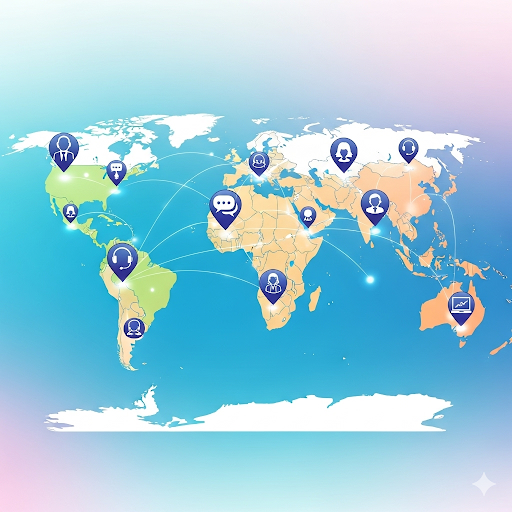
    Citrus Teams Sales Reps work your time zone

    The Hidden Competitive Advantage: Time Zone Coverage

    This is where offshore SDRs become genuinely unfair advantages rather than just cost savings. Let’s say you’re based in California but selling to companies across the U.S. Your local SDR can effectively prospect East Coast companies between 6 AM and 10 AM Pacific that’s it.

    An offshore SDR in the Philippines can comfortably cover East Coast business hours, and with minimal schedule adjustments, they can handle West Coast outreach too. You’re literally getting more productive hours per day of prospecting activity.

    For companies selling internationally, this becomes even more powerful. While your U.S. team sleeps, your offshore SDR is connecting with prospects in European or Asian markets. It’s like having a 24-hour revenue engine.

    Common Objections (And Why They’re Wrong)

    “They Won’t Understand Our Market”

    This assumes local SDRs automatically understand your market better, which honestly isn’t always true. I’ve seen plenty of local SDRs who couldn’t articulate a value proposition if their life depended on it.

    Market understanding comes from training, not geography. A motivated offshore SDR who receives proper onboarding will often outperform a local hire who assumes they already know everything about sales.

    The secret is investing in comprehensive training upfront rather than hoping someone figures it out through osmosis.

    “Language Barriers Will Hurt Conversion”

    Let’s be real about this. Most initial SDR outreach happens via email and LinkedIn messages, not phone calls. Written communication eliminates accent concerns entirely.

    For companies using modern sales development approaches which prioritize email sequences, social selling, and warm handoffs language differences become virtually irrelevant. And honestly? Many offshore SDRs write cleaner, more professional emails than their U.S. counterparts because they take the craft more seriously.

    “We Need Someone Who Can Eventually Move Into Closing”

    This thinking reveals a fundamental misunderstanding of modern sales organizations. The best SDRs rarely become the best closers, and vice versa. These are different skill sets requiring different personalities.

    Great SDRs are hunters they love the chase, the initial connection, the qualification process. Great closers are consultants they build relationships, understand complex needs, and navigate lengthy decision processes.

    Don’t handicap your prospecting by insisting your SDR must eventually become your Account Executive. Hire the best prospector you can afford, then hire the best closer you can afford as separate specialists.

    What Success Looks Like: Real Numbers

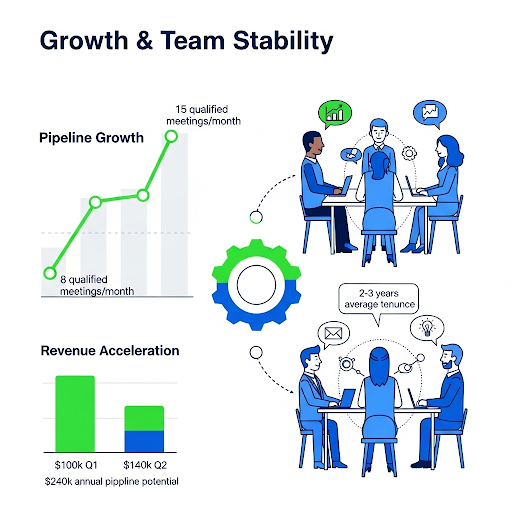
    A well-trained offshore SDR should be able to generate 8-15 qualified meetings per month within their first 90 days. At a conservative 10% close rate and $25,000 average deal size, that’s $20,000-$37,500 in monthly revenue potential.

    Even at the low end, you’re looking at $240,000 in annual pipeline generation from a role that costs roughly $25,000-$30,000 annually. That’s an 8:1 ROI before factoring in the time savings for your leadership team.

    I’ve seen companies double their monthly pipeline within six months of hiring their first offshore SDR, simply because they finally had someone focused full-time on lead generation instead of treating it as everyone’s part-time responsibility.

    The Implementation Framework That Actually Works

    Month 1: Foundation Setting

    Start with obsessive documentation of your ideal customer profile, value propositions, and objection handling. Your offshore SDR can’t read your mind, but they can follow detailed playbooks better than most local hires.

    Create email templates, call scripts, and qualification frameworks. Invest time upfront to save months of confusion later.

    Month 2: Tool Integration and Process Refinement

    Get your SDR fully integrated into your CRM, email automation platform, and prospecting tools. Most offshore professionals are incredibly tech-savvy and will often suggest process improvements you hadn’t considered.

    Start with conservative activity targets and ramp up based on performance. Better to under-promise and over-deliver than create unrealistic expectations.

    Month 3+: Scale and Optimize

    Once your first offshore SDR is performing consistently, this is when the magic happens. You can either scale their activity (more prospects, more sequences) or add additional SDRs to cover different market segments.

    Many companies find that their offshore SDR eventually knows their prospect database better than anyone else on the team. They become the de facto lead qualification expert.

    Beyond Cost Savings: The Strategic Benefits

    Consistency That Local Teams Can’t Match

    Local SDRs job-hop constantly. The average tenure for a U.S.-based SDR is 18 months, and that’s if you’re lucky. Offshore professionals typically stay 2-3 years or longer because they view these roles as serious career opportunities, not stepping stones.

    This consistency means your prospecting processes actually improve over time instead of constantly resetting with new hires. Your offshore SDR develops institutional knowledge about your market, your messaging, and your prospects that becomes increasingly valuable.

    Process Documentation Forcing Function

    Hiring offshore forces you to document and systematize your sales processes in ways you probably never would with local hires. This documentation becomes incredibly valuable as you scale, making subsequent hires (offshore or domestic) much more effective.

    Most companies discover their sales processes were pretty sloppy until they had to explain them clearly to an offshore team member. The forced clarity benefits everyone.

    Common Implementation Mistakes to Avoid

    Treating Them Like Virtual Assistants

    The biggest mistake companies make is hiring offshore SDRs but treating them like glorified data entry clerks. “Just send these emails and book meetings” doesn’t work.

    Offshore SDRs should understand your business model, know your competitive landscape, and be able to have intelligent conversations about your value proposition. Invest in their business education, not just task training.

    Under-Investing in Technology

    Don’t handicap offshore SDRs with inferior tools to save money. They need the same prospecting technology, CRM access, and communication platforms as local team members. Penny-wise, pound-foolish thinking kills offshore programs.

    Insufficient Communication Rhythms

    Establish daily check-ins for the first month, then move to every-other-day once things are running smoothly. Offshore SDRs thrive with consistent feedback and course correction. Radio silence breeds confusion and poor performance.

    The Future of Offshore SDR Teams

    The future of sales is with Citrus Teams

    Companies that figure out offshore SDR success early have a massive long-term advantage. While competitors are burning through local SDR talent and dealing with constant turnover, you’re building a stable, cost-effective prospecting machine.

    The most successful clients we work with often build entire sales development departments offshore, with senior offshore SDRs mentoring junior hires and developing specialized expertise in different market segments.

    Think bigger than just replacing one expensive local hire. Think about building sustainable competitive advantages in lead generation.

    Making the Decision: Is Your Company Ready?

    You’re ready for an offshore SDR if you can check these boxes:

    • You have a defined ideal customer profile and can articulate your value proposition clearly
    • You’re currently doing some form of outbound prospecting (even if inconsistently)
    • You have basic CRM and email automation infrastructure in place
    • Someone on your team can dedicate 5-10 hours per week to training and management initially

    You’re not ready if you’re still figuring out product-market fit or completely changing your target market every month. SDRs need stability to be effective.

    The Bottom Line: Revenue Engine vs. Cost Center

    Most companies think about offshore hiring as cost reduction. Smart companies think about it as revenue acceleration. An offshore SDR isn’t just a cheaper version of a local hire they’re often a better solution because they bring focus, consistency, and scalability that local teams struggle to match.

    The companies winning in today’s market aren’t necessarily the ones with the best products or the most funding. They’re the ones with the most predictable, scalable lead generation systems. And that starts with having someone whose full-time job is filling your pipeline with qualified opportunities.

    Stop thinking about offshore SDRs as a compromise. Start thinking about them as your secret weapon for consistent, cost-effective growth.

    Frequently Asked Questions

    Q: How long does it take to onboard an offshore SDR effectively? A: Most offshore SDRs can start generating qualified meetings within 30-45 days with proper training and clear processes. Full productivity typically happens around the 90-day mark.

    Q: What’s the typical cost comparison between local and offshore SDRs? A: Local SDRs cost $80,000-$120,000+ annually (salary, benefits, overhead). Quality offshore SDRs deliver similar results for $25,000-$35,000 annually, representing 60-70% cost savings.

    Q: How do you ensure quality control with offshore SDRs? A: Through clear KPIs, regular performance reviews, recorded calls for coaching, and consistent communication rhythms. The key is treating them as true team members with professional development opportunities.

    Q: What industries work best for offshore SDRs? A: B2B SaaS, professional services, manufacturing, and technology companies see the strongest results. Any industry with defined buyer personas and email-friendly prospects works well.

    Q: Can offshore SDRs handle complex technical products? A: Absolutely. With proper training, offshore SDRs often become more knowledgeable about technical products than local hires because they take documentation and learning more seriously.


    Ready to build your own predictable revenue engine? Citrus Teams specializes in finding, training, and integrating offshore SDRs who become true extensions of your sales team. We handle the sourcing, screening, and onboarding so you get a fully productive team member within 5-7 business days not months of trial and error.

    Schedule a consultation to learn how offshore SDRs can accelerate your growth while reducing your payroll costs by 70%.


    Meta Title: Why SDRs Are the Best First Offshore Hire for Growing Companies

    Meta Description: Discover why smart companies hire offshore SDRs first. Learn the strategic benefits, ROI metrics, and implementation framework for offshore sales development success.