Tag: VA for business owners

  • Why Hiring a VA is Better Than “Hustling Harder”: A Smarter Approach to Business Growth

    Why Hiring a VA is Better Than “Hustling Harder”: A Smarter Approach to Business Growth

    Introduction: The Hustle Culture Trap

    Are you caught in the endless cycle of “rise and grind,” working longer hours yet still falling behind on your business goals? You’re not alone. A striking 61% of small business owners report working well over 40 hours per week, with nearly a third working more than 50 hours, according to the Small Business Administration. This “hustle harder” mentality has been glorified in entrepreneurial circles for years, but mounting evidence suggests it’s actually counterproductive for sustainable business growth.

    In this comprehensive guide, we’ll explore why hiring a virtual assistant is a strategically superior alternative to simply working more hours. We’ll examine how delegating administrative tasks to a professional VA can help you reclaim valuable time, reduce burnout, and ultimately grow your business more effectively than the traditional hustle approach.
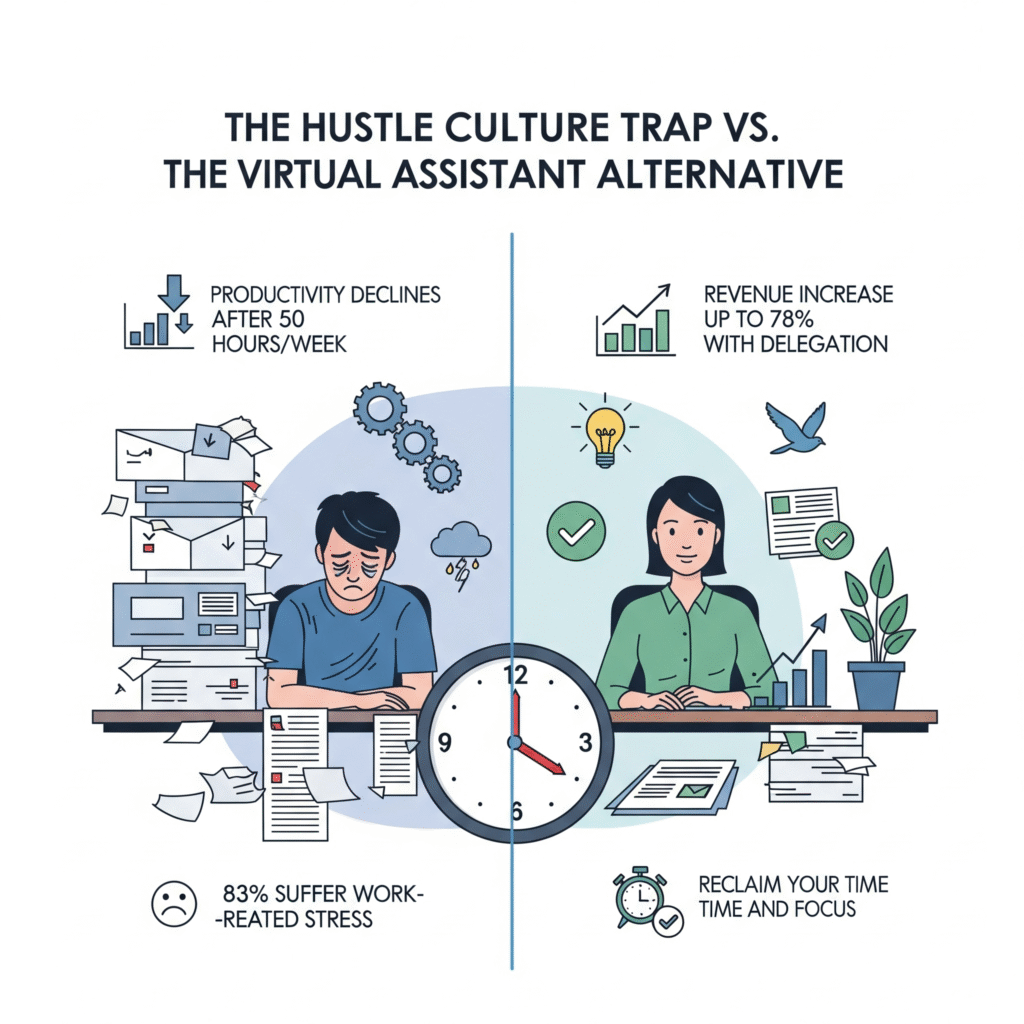
    (Infographic showing the negative impacts of overworking versus the benefits of delegation.)

    The Real Cost of the “Hustle Harder” Mindset

    Diminishing Returns on Time Investment

    The “hustle culture” promotes the idea that success comes from outworking everyone else. However, research from Stanford University shows that productivity sharply declines after 50 hours of work per week, and virtually flatlines after 55 hours. This means those extra late-night hours you’re putting in might be giving you the illusion of productivity while actually yielding minimal results.

    The Burnout Factor

    Constantly pushing yourself beyond healthy limits doesn’t just affect productivity—it impacts your health. The American Institute of Stress reports that 83% of workers suffer from work-related stress, with business owners at particularly high risk. This chronic stress leads to:

    • Reduced decision-making capacity
    • Impaired creativity and problem-solving skills
    • Higher rates of physical illness
    • Strained personal relationships
    • Decreased overall life satisfaction

    Opportunity Cost of DIY Everything

    When you’re caught in the hustle trap, you’re likely handling everything yourself—from core business functions to administrative tasks. Every hour spent on low-value administrative work represents an hour not spent on high-value strategic activities that actually grow your business.

    The Virtual Assistant Alternative: Work Smarter, Not Harder

    What is a Virtual Assistant?

    A virtual assistant (VA) is a remote professional who provides administrative, technical, or creative support to businesses. Unlike the “hustle harder” approach, which demands more of your limited time and energy, a VA allows you to multiply your productivity through effective delegation.

    The Strategic Advantage of Delegation

    1. Focus on Revenue-Generating Activities

    When you hire a VA from Citrus Assistants, you can redirect your focus to the 20% of activities that generate 80% of your results. According to a Mavenlink study, business owners who effectively delegate can increase their revenue by up to 78% compared to those who try to do everything themselves.

    2. Expert Support at a Fraction of the Cost

    Hiring a full-time, in-office administrative assistant costs an average of $39,850 per year plus benefits, according to the Bureau of Labor Statistics. In contrast, a virtual assistant from Citrus Assistants can save you up to 76% in operational costs while providing the same level of support—often with specialized expertise in your industry.

    3. Scalable Business Operations

    The “hustle harder” approach has a clear ceiling—there are only so many hours in a day, no matter how hard you work. Virtual assistants provide scalable support that can grow with your business needs, whether you need 10 hours of help per week or 40.

    10 Tasks to Delegate to Your Virtual Assistant Instead of Hustling Harder

    1. Email Management and Communication

    The average professional spends 28% of their workday reading and answering emails. Your Citrus Assistant can:

    • Filter and prioritize your inbox
    • Draft responses to routine inquiries
    • Flag urgent messages requiring your attention
    • Maintain organized email folders and systems

    2. Calendar Management and Scheduling

    Stop wasting hours on the back-and-forth of scheduling. Your VA can:

    • Coordinate appointments and meetings
    • Send reminders to you and meeting participants
    • Reschedule when conflicts arise
    • Block out focused work time in your calendar

    3. Customer Service and Follow-up

    In construction and service industries, client communication is crucial but time-consuming. Your VA can:

    • Respond to initial client inquiries
    • Provide updates on project progress
    • Handle routine customer questions
    • Coordinate client feedback and reviews

    4. Documentation and Paperwork Processing

    For contractors and insurance brokers, paperwork can be overwhelming. A Citrus Assistant can manage:

    • Certificate of insurance coordination
    • Permit application preparation
    • Contract management
    • Document organization and filing

    5. Research and Data Compilation

    Research tasks can be delegated to your VA, including:

    • Competitor analysis
    • Supplier and materials research
    • Industry trend monitoring
    • Client background research before important meetings

    6. Social Media and Online Presence Management

    Instead of late-night social media sessions, your VA can:

    • Create and schedule posts
    • Respond to comments and messages
    • Monitor brand mentions
    • Report on engagement analytics

    7. Bookkeeping and Financial Tasks

    Basic financial administration can be handled by your VA:

    • Invoice creation and tracking
    • Expense categorization
    • Payment follow-ups
    • Financial record organization

    8. Travel Arrangements and Logistics

    For businesses requiring travel, your VA can:

    • Research and book flights and accommodations
    • Create detailed itineraries
    • Make restaurant reservations
    • Coordinate ground transportation

    9. Project Coordination

    Keep projects on track without micromanaging by having your VA:

    • Update project management software
    • Send status updates to stakeholders
    • Coordinate with subcontractors
    • Monitor deadlines and deliverables

    10. Personal Tasks and Errands

    Reclaim personal time by delegating:

    • Gift purchasing for clients or staff
    • Personal appointment scheduling
    • Online research for personal needs
    • Life admin tasks that drain your energy

     (Visual representation of various tasks being effortlessly delegated by a business owner to a virtual assistant.)

    Industry-Specific Benefits: How VAs Help Construction and Insurance Businesses

    For Construction Contractors

    Construction businesses face unique administrative challenges that can be efficiently handled by a specialized virtual assistant:

    • Bid preparation support: Your VA can format and organize bid documents, ensuring all requirements are met before submission.
    • Subcontractor coordination: Manage communications between multiple subcontractors to prevent scheduling conflicts.
    • Permit tracking: Monitor permit status and follow up with regulatory offices to prevent project delays.
    • Materials ordering and tracking: Coordinate with suppliers to ensure materials arrive on schedule.

    For Insurance Brokerages

    Insurance professionals can benefit from industry-specific VA support:

    • Carrier downloads processing: Handle routine information updates from carriers.
    • Renewal monitoring: Track upcoming policy renewals and prepare necessary documentation.
    • Certificate of insurance management: Process and maintain proper documentation for all clients.
    • Client relationship management: Maintain regular touch points with clients to improve retention.

    Case Study: The Real Impact of Choosing a VA Over Hustling Harder

    Construction Company Success Story

    John, owner of a small construction company with 3 employees, was working 70+ hours weekly handling both on-site work and office tasks. After hiring a Citrus Assistant for 20 hours per week:

    • Administrative work was completed in half the time it previously took him
    • Bid response time improved by 60%
    • Client communication rating improved from 3.8/5 to 4.7/5
    • John reduced his work week to 50 hours while increasing revenue by 23%

    Insurance Broker Transformation

    Sarah, an independent insurance broker, was missing family events due to paperwork overload. After bringing on a specialized Citrus Assistant:

    • Policy renewal rates increased from 76% to 94%
    • Documentation errors decreased by 88%
    • Client response time improved from 24 hours to under 3 hours
    • Sarah reclaimed 15 hours weekly while growing her client base by 17%

    : (Split image showing contrasting before-and-after scenarios of a business owner's workday after hiring a VA.)

    How to Transition from Hustling to Strategic Delegation

    Step 1: Track Your Time for One Week

    Before hiring a VA, document exactly how you spend your time. Identify which low-value tasks consume your hours but don’t directly contribute to business growth.

    Step 2: Calculate the Cost of Your Time

    Determine your effective hourly rate by dividing your annual income by your working hours. This helps quantify the cost of handling $15/hour tasks when your time is worth $150/hour or more.

    Step 3: Start with a Focused Task List

    Begin by delegating specific, well-defined tasks rather than broad responsibilities. This allows both you and your VA to build confidence in the delegation process.

    Step 4: Develop Systems and Processes

    Document your workflows and expectations clearly. This initial investment of time creates a foundation for efficient delegation moving forward.

    Step 5: Regular Check-ins and Feedback

    Schedule consistent communication with your VA to refine processes and address any questions or challenges that arise.

    Quick Takeaway Box

    Key Takeaway: Hustling harder isn’t sustainable or strategic. By hiring a virtual assistant from Citrus Assistants, you can delegate administrative tasks, focus on high-value work, reduce stress, and ultimately grow your business more effectively while working fewer hours. The most successful entrepreneurs don’t work more—they leverage their time through strategic delegation.

    Common Questions About Choosing a VA Over Hustling

    Won’t I Save Money by Doing Tasks Myself?

    While doing everything yourself appears to save money upfront, it’s actually more expensive when you consider opportunity cost. Every hour spent on administrative tasks is an hour not spent on business development, client relationships, or strategic planning—activities that directly impact your bottom line.

    How Do I Know Which Tasks to Delegate?

    Start by delegating tasks that are:

    • Time-consuming but necessary
    • Repetitive and process-driven
    • Important but not requiring your specific expertise
    • Not directly related to revenue generation

    What About the Learning Curve for a New VA?

    There will be an initial investment of time to onboard any new team member, but Citrus Assistants minimizes this by providing pre-trained VAs familiar with your industry. The short-term investment quickly pays dividends in long-term time savings.

    Is It Really Possible to Get Quality Work from Someone Remote?

    Absolutely. Studies show that remote workers are often more productive than in-office staff. Citrus Assistants are professional, experienced, and held to strict quality standards. Many clients report higher quality work from their VAs compared to previous in-house support staff.

    How Quickly Will I See Results from Hiring a VA?

    Most Citrus Assistants clients report noticeable time savings within the first two weeks. The full impact on business growth typically becomes apparent within 2-3 months as you reinvest your reclaimed time into strategic activities.

    Conclusion: Choose Growth Over Grind

    The “hustle harder” mentality might seem admirable, but it’s ultimately a path to burnout and limited growth. By partnering with a Citrus Assistant, you’re not just delegating tasks—you’re making a strategic decision to focus on what truly matters in your business.

    Ready to stop hustling harder and start growing smarter? Contact Citrus Assistants today to discover how our specialized virtual assistant services can transform your workday and accelerate your business growth.

    Call to Action

    Take the first step toward reclaiming your time and growing your business strategically. Schedule a free consultation with Citrus Assistants today to discuss your specific needs and discover the perfect VA solution for your business.

    [Schedule Your Free Consultation] [Learn More About Our Services]

    Join the Conversation

    Have you tried working with a virtual assistant, or are you still in the “hustle harder” mindset? Share your experiences in the comments below!

    References

    1. Small Business Administration. (2023). Small Business Owner Work Habits Survey.
    2. Stanford University. (2022). Productivity and Working Hours Study.
    3. American Institute of Stress. (2023). Workplace Stress Statistics.
    4. Mavenlink. (2023). Business Growth Through Delegation Report.
    5. Bureau of Labor Statistics. (2023). Occupational Employment and Wage Statistics.

  • What Is COI Tracking and Why You’re Losing Time on It

    What Is COI Tracking and Why You’re Losing Time on It

    If you run a construction company, you’ve definitely dealt with Certificates of Insurance (COIs). And if you’re still managing them manually, there’s a good chance you’re wasting hours every week chasing paperwork and scrambling before inspections.

    A folder labeled "Certificates of Insurance" sits on a desk next to a construction hard hat and laptop.

    But what exactly is COI tracking? And why is it eating up so much of your time?

    Let’s break it down in plain terms—and show you how to offload it without dropping the ball.


    What Is a Certificate of Insurance (COI)?

    A COI is a one-page summary that proves a subcontractor or vendor has active insurance coverage. It shows key details like:

    • Policyholder name
    • Insurance company
    • Policy number
    • Coverage types (general liability, workers’ comp, auto, etc.)
    • Coverage limits
    • Policy effective and expiration dates

    Clients and general contractors require them to ensure everyone working on site is properly insured.


    What Is COI Tracking?

    COI tracking is the ongoing process of:

    • Collecting COIs from subcontractors, vendors, and other third parties
    • Verifying coverage levels meet your project/client requirements
    • Logging expiration dates and policy details in a tracker or spreadsheet
    • Following up for renewals before a policy expires
    • Ensuring no one is working on site with an expired or missing COI

    Done right, COI tracking protects you from massive liability. Done wrong—or neglected—it opens you up to risk, fines, or even project shutdowns.


    Why You’re Losing Time (and Money) on COI Tracking

    Let’s say you’re handling COIs yourself or relying on your site foreman to manage them. Here’s what likely happens:

    1. You chase documents piecemeal

    You’re texting or emailing subs for missing COIs days before work starts—or worse, while the job is already underway.

    2. You forget renewal dates

    If you’re not tracking expiration dates, subs could be uninsured without you knowing it.

    3. You verify details manually

    Every COI has to be checked—line by line—to make sure coverage limits meet project requirements. That takes time.

    4. You store files inconsistently

    Some are on your phone, some in email threads, some on your desktop. When an auditor or GC asks for proof, it’s a scramble.


    Real Risks of Poor COI Tracking

    • Working with uninsured subcontractors
    • Delays from failed inspections or audits
    • Rejected claims because of missing coverage
    • Client trust issues and lost contracts
    • Extra admin time every time a project starts
    A frustrated construction owner with his head in his hands, surrounded by disorganized paperwork at his desk.

    This is one of those back-office tasks that isn’t urgent—until it becomes a big problem.


    How a Virtual Assistant Handles COI Tracking for You

    A trained virtual assistant (VA) can take full control of your COI process. Here’s what they do:

    ✅ Collect COIs from every new subcontractor or vendor

    They request and organize the documents before the job starts.

    ✅ Track expiration dates in a shared system

    They use a spreadsheet or software to set up reminders 30 days before expiration.

    ✅ Verify insurance limits match your project/client requirements

    No more guessing or missing details—your VA reviews every line item.

    ✅ Follow up for renewals automatically

    They reach out to vendors for updated COIs so you’re never caught off guard.

    ✅ Keep everything stored in one clean, accessible folder

    Whether it’s Google Drive or Dropbox, your documents are always ready when needed.

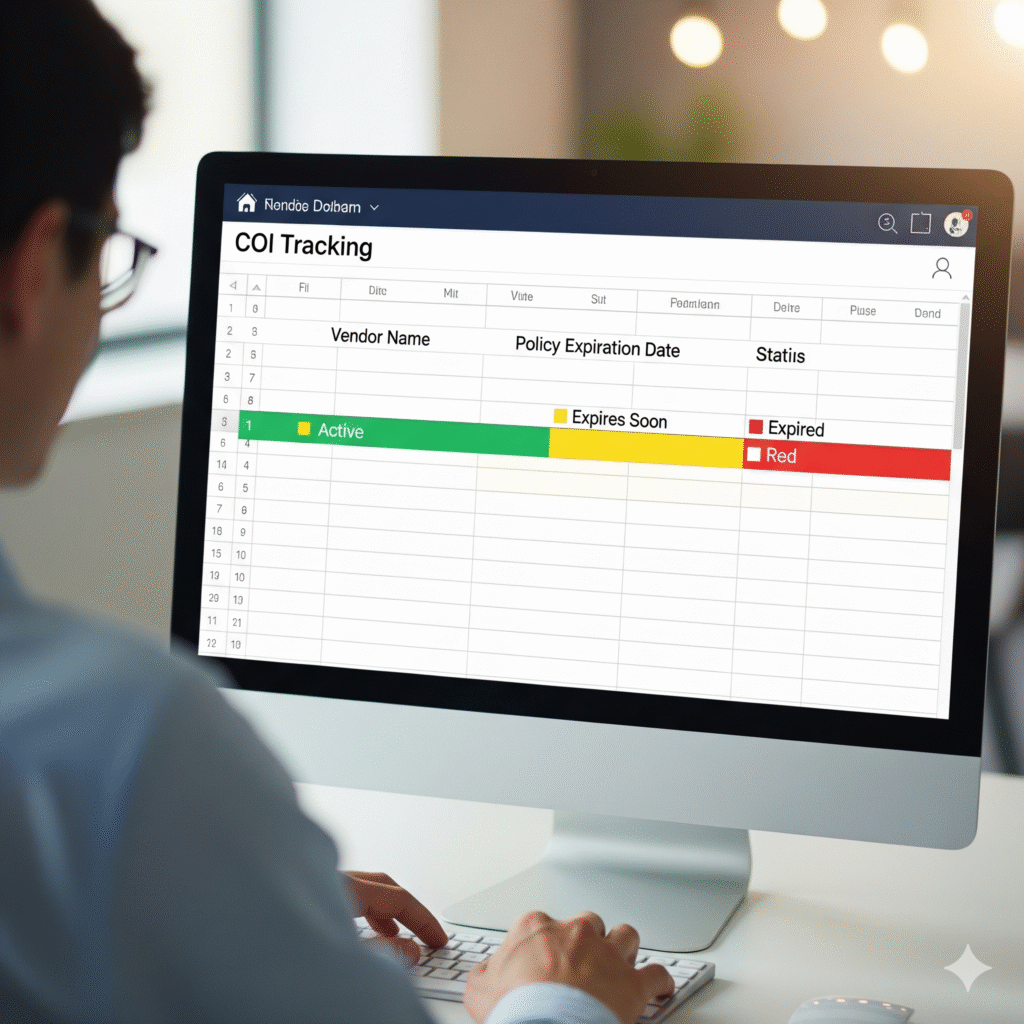
    An organized digital COI tracking dashboard on a computer screen, showing vendor names and color-coded expiration dates.

    What This Saves You (Every Single Week)

    • 3–5 hours of admin follow-up
    • The panic of missing documentation during a surprise audit
    • Liability from uninsured subs on site
    • Missed jobs because of delayed compliance
    • The mental load of having to “remember everything”

    All gone. All delegated.


    Signs It’s Time to Hand Off COI Tracking

    • You’re manually emailing subs for COIs before every job
    • You’ve had at least one expire without realizing it
    • You can’t find half your COIs without digging
    • You’re not sure if coverage limits are compliant
    • You’ve lost time or trust over document issues

    If any of these hit home, it’s time to delegate the task entirely.


    Get Out of the COI Admin Loop

    You don’t need to handle this process yourself. And you definitely don’t need to hire a full-time office admin just for insurance paperwork.

    A remote assistant trained in construction admin can manage your COIs with precision—so you never have to think about it again.

    Because the only thing worse than chasing paperwork… is facing a lawsuit for not having it.

  • Scaling Your Business With Just One Assistant

    Scaling Your Business With Just One Assistant

     A business owner in their office having an effective video call with their virtual assistant, who is in a professional home office.

    Most business owners think you need a team of people to grow.

    But the truth is—you can scale faster, more profitably, and with less stress by hiring just one good assistant.

    Whether you run a construction company, insurance agency, or another service-based business, the right assistant can transform your day-to-day—and free you up to focus on high-impact work.

    Let’s break down exactly how one assistant can help you scale, even before you hire a full team.


    Why You’re Stuck: Doing Everything Yourself

    It starts small—answering a few emails, handling a couple of invoices, scheduling client calls. But over time, you find yourself buried in:

    • Endless admin
    • Missed follow-ups
    • Sloppy backend systems
    • And zero time to actually grow your business

    If you’re spending hours every day on things someone else could handle, you’re the bottleneck in your own growth.


    What Just One Assistant Can Take Off Your Plate

    A trained virtual assistant (VA) can take full ownership of your daily tasks without ever stepping foot in your office.

    Here’s what they can manage for you:

    ✅ Inbox and Calendar Management

    • Organizing emails, flagging important messages, and replying on your behalf
    • Booking calls, confirming appointments, and sending reminders

    ✅ Client Communication

    • Following up with leads
    • Sending contracts and onboarding emails
    • Answering basic client questions

    ✅ Admin and Paperwork

    • Updating spreadsheets and CRMs
    • Managing certificates, forms, and reports
    • Organizing digital files for projects

    ✅ Light Project Coordination

    • Tracking task progress
    • Checking in with vendors or subcontractors
    • Making sure nothing slips through the cracks
    A virtual assistant efficiently managing business tasks like spreadsheets and emails from a modern and organized home office setup.

    The Compound Effect of Delegating 4 Hours a Day

    Let’s say your assistant handles just 4 hours of admin work each day.

    That’s 20 hours a week, or over 1,000 hours a year of your time saved.

    What could you do with that time?

    • Close more deals
    • Improve customer experience
    • Build new offers
    • Expand to new markets
    • Take a break without your business stalling

    One assistant doesn’t just “help”—they multiply your capacity.


    Real Signs It’s Time to Hire Your First Assistant

    Not sure if you’re ready? If any of these sound familiar, you are:

    • You’re answering emails at midnight
    • You keep rescheduling calls or missing appointments
    • You have clients waiting for updates
    • You’re spending more time on admin than strategy
    • You can’t remember the last time you felt caught up

    If you’re nodding along, it’s time to offload.


    What You Should NOT Do When Hiring Your First Assistant

    Avoid these common mistakes:

    ❌ Don’t delegate without a process
    Have a clear list of what you want done—and how.

    ❌ Don’t expect a clone of you
    Your VA supports you, not replaces you. Delegate tasks, not decisions.

    ❌ Don’t ghost your assistant
    Set regular check-ins, especially in the first few weeks.

    ❌ Don’t assume they need to be in-person
    Remote VAs work just as efficiently—often better.

    The key is clear expectations and trust. Build the system once, and you’ll never look back.


    Why Just One Assistant Is Enough to Start Scaling

    You don’t need a whole team to grow. You need to protect your time so you can do the things only you can do.

    Here’s how one assistant fuels growth:

    • They give you hours back
    • They improve consistency and professionalism
    • They help you respond faster, follow up better, and look more organized
    • They make clients feel supported even when you’re unavailable

    Most importantly? They remove the daily friction that slows you down.


    How to Start Today (Even If You’ve Never Delegated Before)

    1. Write down your daily tasks
      Highlight anything repetitive, admin-heavy, or time-consuming.
    2. Group them into categories
      Emails, scheduling, customer support, reports, etc.
    3. Pick the easiest 5–10 to delegate
      Start small. See the results. Then expand.
    4. Set up tools your VA can use
      Google Drive, Slack, your calendar—make it easy to collaborate.
    5. Hire a dedicated VA through a trusted provider
      Make sure they’re trained in your industry or needs.

    You don’t need a perfect system to start—you just need to get out of your own way.


    Quick Wins You’ll See After Hiring One Assistant

    • You’ll stop missing emails and calls
    • You’ll get through your to-do list faster
    • You’ll finally feel ahead of your business, not behind it
    • Clients will notice faster response times
    • You’ll stop saying “I’ll do it later”—because it’s already done

    Scale Now, Not Later

    If you’re overwhelmed but waiting to hire “until you’re bigger,” you’ve got it backwards.

    You grow by freeing up your time—not by piling more on your plate.

    Just one virtual assistant can help you:

    ✅ Clear the admin backlog
    ✅ Protect your calendar
    ✅ Improve client experience
    ✅ Create space to scale

    It’s the smallest hire that makes the biggest difference.

     A relieved and happy business owner leaning back in their chair, laptop closed, having successfully delegated their administrative work.
  • How VAs Help With Subcontractor Coordination

    How VAs Help With Subcontractor Coordination

    Subcontractor coordination can either keep your job sites running like clockwork—or turn them into a logistical mess.

    You’re dealing with multiple trades, shifting schedules, missed deliveries, and last-minute changes. And if you’re handling it all yourself, you’re spending more time texting, calling, and chasing updates than actually managing the project.

    The fix? Let a trained virtual assistant (VA) take the coordination burden off your plate.

    Here’s how VAs help contractors stay organized, on schedule, and ahead of the chaos.


    The Real Problem With Subcontractor Coordination

    When you’re running a job, subcontractor coordination isn’t just a checklist—it’s a full-time communication loop. And most construction owners are stuck doing it all themselves.

    That leads to:

    • Miscommunication between trades
    • Missed site updates
    • Delayed materials or inspections
    • Overlapping crews and wasted time
    • Endless texts, calls, and back-and-forth

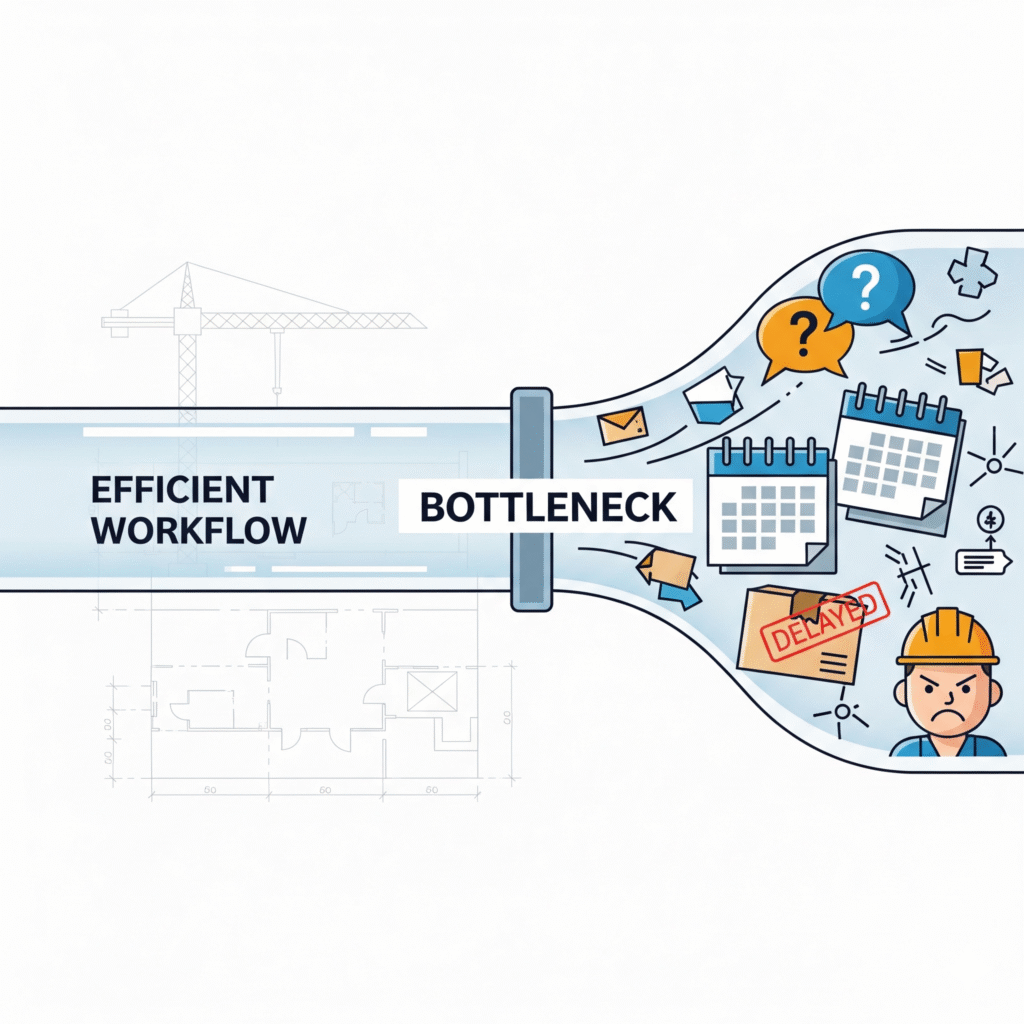
    The more jobs you juggle, the more coordination becomes your bottleneck.


    What a Virtual Assistant Can Handle for You

    A construction-savvy VA can support subcontractor coordination in five major ways:

    ✅ Scheduling and Calendar Syncing

    • Reach out to subs to confirm availability
    • Coordinate arrival times based on job phases
    • Send calendar invites or reminders to each crew
    • Adjust timelines based on weather or inspection delays

    [ADD STOCK IMAGE: COLOR-CODED CONSTRUCTION SCHEDULE ON COMPUTER SCREEN WITH CREW NAMES]


    ✅ Daily Check-Ins and Updates

    • Message or call subs each morning for status updates
    • Confirm who’s arriving, when, and what they need
    • Notify you immediately of delays or no-shows
    • Update the job log or shared dashboard

    ✅ Centralized Communication Hub

    • Use Slack, email, or text to manage all sub interactions
    • Keep a record of every update, instruction, or question
    • Ensure nothing slips through the cracks—no more lost texts

    ✅ Material and Equipment Coordination

    • Confirm material deliveries are scheduled before the crew arrives
    • Coordinate with suppliers or rental companies
    • Make sure subs have what they need before showing up on site

    [ADD STOCK IMAGE: VIRTUAL ASSISTANT ON CALL WITH MATERIAL SUPPLIER, CHECKLIST ON SCREEN]


    ✅ Post-Job Wrap-Ups and Documentation

    • Collect subcontractor invoices and COIs
    • Confirm completed work for milestone payments
    • Log notes, issues, or punch list items for each crew
    • Prepare reports or updates for you to review

    Why Subcontractors Actually Prefer Working With a VA

    Subs want clarity, quick responses, and zero confusion. When a VA manages the communication:

    • They get faster answers
    • They know exactly when and where to show up
    • They waste less time waiting on instructions
    • They feel more respected and professionalized

    That means better work, fewer mistakes, and smoother job sites.


    You Stay Focused. Your VA Handles the Chatter.

    As the owner, your job is to manage the project, not every phone call or schedule change.

    With a VA in place:

    • You get a daily briefing, not dozens of calls
    • You can step away from your phone without fear
    • You spend your time on strategy, sales, or site visits
    • You scale without hiring another full-time coordinator

    [ADD STOCK IMAGE: BUSINESS OWNER MEETING WITH CLIENT WHILE VA HANDLES PHONE COMMUNICATION]


    Signs You Need a VA for Subcontractor Coordination

    • You’re constantly texting subs during dinner
    • You’ve had crews show up on the wrong day
    • You forgot to confirm materials for a job
    • You’re re-explaining things over and over
    • You’re falling behind on more than one project at once

    If that’s you, it’s time to get admin support.


    What Makes a Great VA for Sub Coordination?

    • Strong communication skills (email, phone, Slack, etc.)
    • Familiar with basic construction workflows and trades
    • Comfortable using shared calendars and project trackers
    • Organized enough to follow up without reminders
    • Able to work in U.S. time zones and communicate clearly

    You don’t need someone in your office—you need someone reliable in your corner.


    Free Yourself From the Coordination Bottleneck

    Subcontractor coordination is essential—but it doesn’t have to be your job.

    Let a VA take over the communication, follow-ups, and scheduling while you focus on running better projects and growing the business.

    Because the faster you delegate the admin, the faster your jobs move forward.

  • How Small Brokerages Can Grow Without Hiring Full-Time Staff: The Virtual Assistant Solution

    How Small Brokerages Can Grow Without Hiring Full-Time Staff: The Virtual Assistant Solution

    Introduction: The Growth Dilemma for Small Brokerages

    Are you a small brokerage owner feeling trapped between growth ambitions and limited resources? You’re not alone. According to industry data, approximately 68% of small insurance brokerages identify staffing constraints as their primary barrier to growth. As client demands increase and regulatory requirements become more complex, the administrative burden becomes overwhelming—but hiring full-time staff at $50,000+ per year can quickly erode your profit margins.

    Fortunately, there’s a strategic alternative that’s revolutionizing how small brokerages scale: virtual assistants. This comprehensive guide explores how insurance brokerages can leverage virtual assistant services to achieve sustainable growth without the financial strain of hiring full-time employees.

    Quick Takeaway: Small brokerages can save up to 76% on operational costs by utilizing virtual assistants instead of full-time staff while maintaining high-quality service delivery and creating capacity for business development.

    The Staffing Challenge: Why Traditional Hiring Holds Brokerages Back

    Cost Barriers of Traditional Staffing

    For small insurance brokerages, the financial reality of hiring full-time staff is often prohibitive:

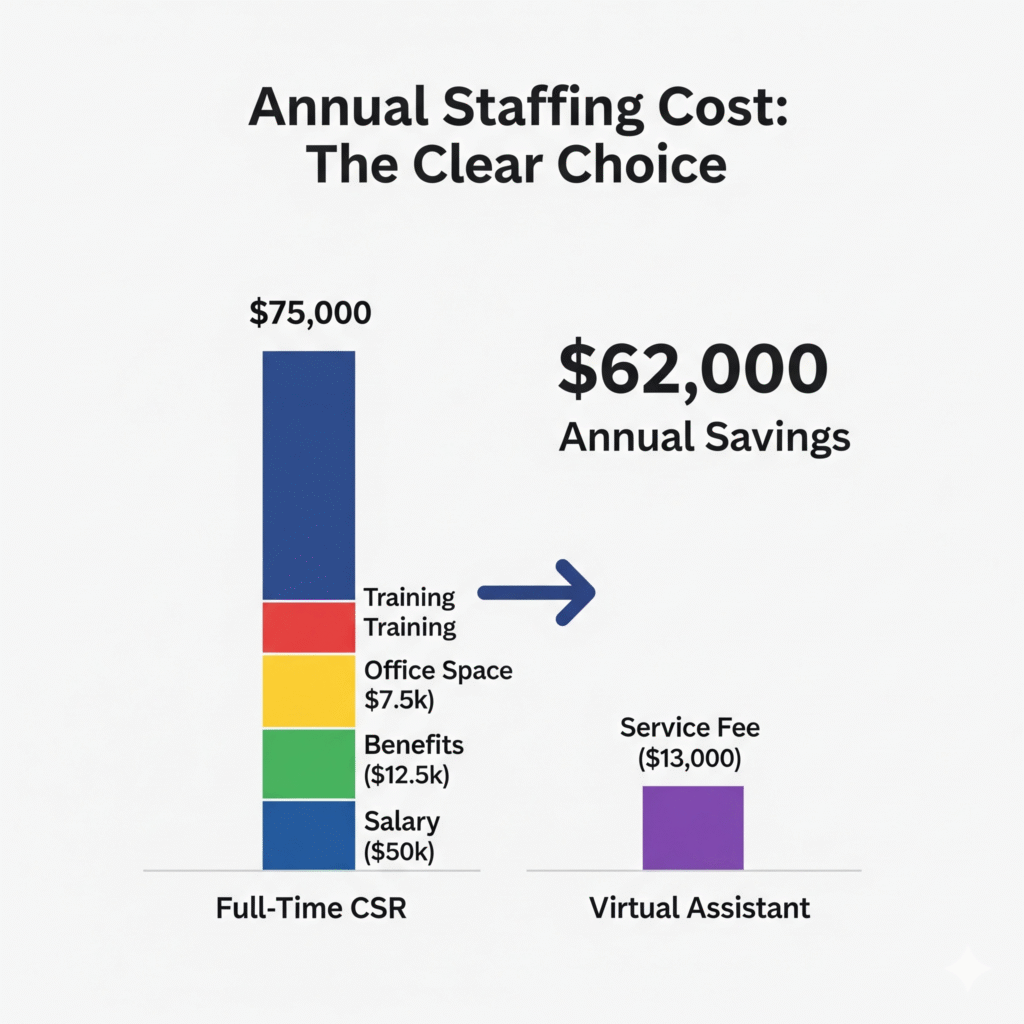
    • Salary Expenses: Customer Service Representatives (CSRs) typically command salaries starting at $50,000 annually
    • Benefits Costs: Health insurance, retirement contributions, and other benefits add 20-30% to base salary
    • Training Investment: New employees require 3-5 months of training before reaching optimal productivity
    • Office Space & Equipment: Each new hire necessitates additional workspace, computers, and supplies

    These expenses can quickly consume capital that could otherwise be invested in business development, marketing initiatives, or technology upgrades that drive growth.

    Operational Inefficiencies

    Beyond the direct costs, traditional staffing models create several operational challenges:

    • Fluctuating Workloads: Insurance brokerages often experience seasonal peaks that leave staff either overwhelmed or underutilized
    • Administrative Overhead: HR management, payroll processing, and compliance requirements divert focus from core business activities
    • Capacity Limitations: Physical office constraints may restrict expansion potential
    • Productivity Gaps: Sick days, vacations, and turnover create service disruptions and knowledge gaps

    Virtual Assistants: The Strategic Growth Alternative for Brokerages

    What Makes Virtual Assistants Ideal for Insurance Brokerages

    Virtual assistants represent a flexible, cost-effective solution perfectly aligned with the operational needs of small brokerages:

    • Specialized Knowledge: Many virtual assistant services (like Citrus Assistants) offer industry-specific support with professionals already familiar with insurance terminology and processes
    • Scalable Support: Services can be adjusted based on seasonal demands and growth patterns
    • Cost Efficiency: Virtual assistants cost as little as $12,000 annually compared to $50,000+ for full-time CSRs
    • Immediate Productivity: Experienced virtual assistants require minimal training before handling essential tasks

    Core Insurance Tasks Virtual Assistants Can Handle

    Virtual assistants can manage a comprehensive range of insurance-related administrative functions:

    Client Management

    • Processing new client applications
    • Managing policy renewals and updates
    • Handling routine client inquiries
    • Sending policy documents and information

    Documentation & Compliance

    • Managing certificates of insurance
    • Processing carrier downloads
    • Organizing policy documentation
    • Maintaining compliance records

    Administrative Support

    • Scheduling client meetings and follow-ups
    • Managing email communications
    • Data entry and database management
    • Calendar organization and appointment setting

    Business Development Support

    • Lead management and follow-up coordination
    • Market research and competitor analysis
    • Creating presentation materials
    • Social media management and content scheduling

    Case Study: How Citrus Assistants Transformed a Small Insurance Brokerage

    Before Virtual Assistant Integration

    Pacific Northwest Insurance Advisors, a small brokerage with three licensed agents, struggled with administrative bottlenecks that limited their growth potential:

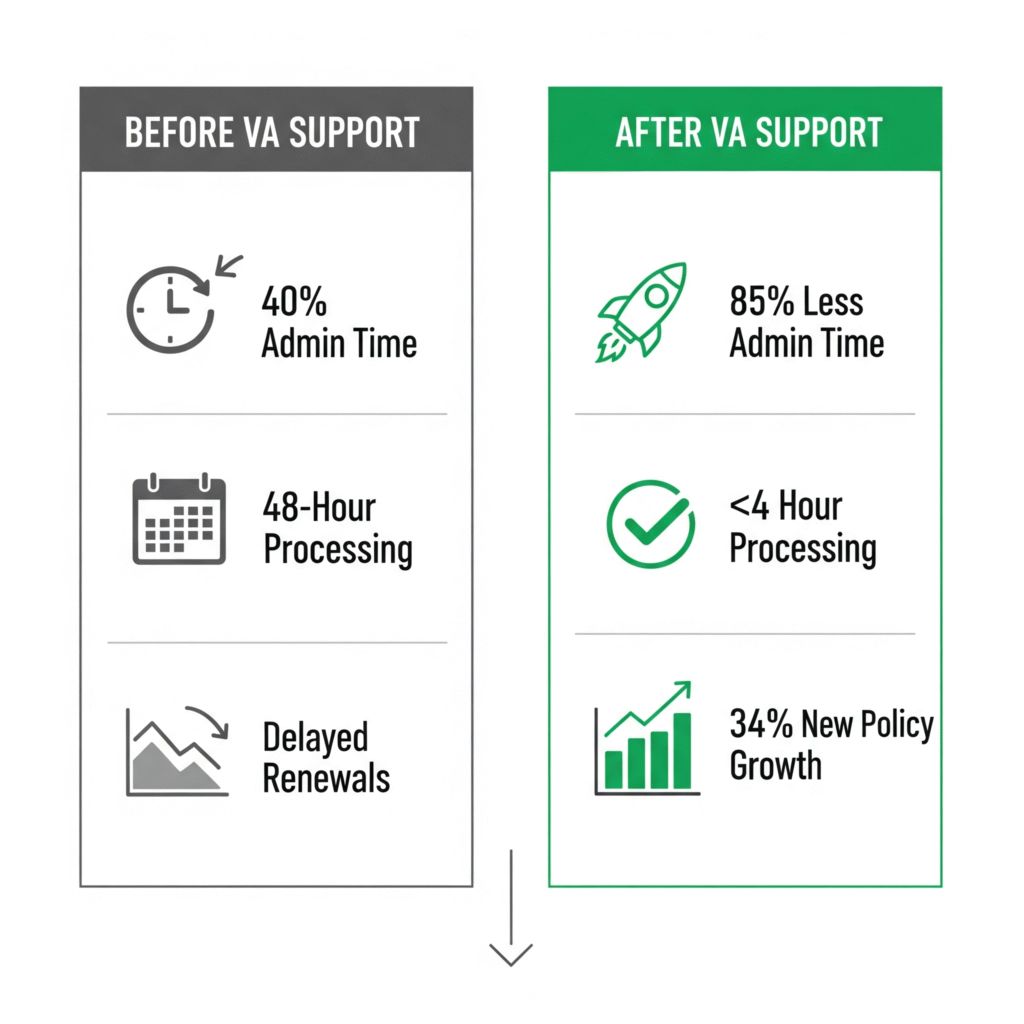
    • Agents spent 40% of their time on administrative tasks instead of client acquisition
    • Certificate of insurance requests took an average of 48 hours to process
    • Client response times averaged 24+ hours during busy periods
    • Renewal follow-ups were frequently delayed, resulting in potential policy lapses

    After Implementing Citrus Assistants

    Within 90 days of partnering with Citrus Assistants, Pacific Northwest Insurance Advisors experienced remarkable improvements:

    • Administrative time for agents decreased by 85%, freeing 30+ hours weekly for business development
    • Certificate processing time reduced to under 4 hours
    • Client response times improved to same-day service (average 3.5 hours)
    • Renewal management became proactive with 30-day advance communications
    • Monthly new policy sales increased by 34% due to agents’ increased availability for sales activities

    Most importantly, these improvements came at less than one-third the cost of hiring a full-time CSR, allowing the brokerage to invest the savings in marketing initiatives that further accelerated growth.

    The Implementation Roadmap: How to Integrate Virtual Assistants Into Your Brokerage

    Step 1: Operational Assessment

    Begin by identifying the administrative tasks consuming the most time and determining which could be effectively delegated:

    • Track time spent on various activities for 1-2 weeks
    • Identify processes that follow consistent patterns
    • Document existing workflows and standard procedures
    • Prioritize tasks based on time consumption and delegation potential

    Step 2: Strategic Selection

    When choosing a virtual assistant service, prioritize providers with:

    • Insurance Industry Experience: Familiarity with insurance terminology and processes
    • Compliance Knowledge: Understanding of documentation requirements and privacy regulations
    • Communication Skills: Professional client interaction capabilities
    • Technology Proficiency: Experience with common insurance software and platforms

    Step 3: Systematic Integration

    Create a structured onboarding plan:

    • Develop clear process documentation
    • Schedule regular check-ins during the transition period
    • Start with less complex tasks before progressing to more involved responsibilities
    • Establish clear communication protocols and expectations

    Step 4: Continuous Optimization

    Regularly evaluate performance and adjust as needed:

    • Track key performance metrics (response times, task completion rates)
    • Gather client feedback on service quality
    • Identify opportunities for additional task delegation
    • Implement regular process improvement reviews

    ROI Analysis: The Financial Impact of Virtual Assistants for Small Brokerages

    Cost Comparison: Full-Time CSR vs. Virtual Assistant

    Expense CategoryFull-Time CSRVirtual AssistantAnnual Savings
    Base Compensation$50,000$12,000$38,000
    Benefits (25%)$12,500$0$12,500
    Office Space/Equipment$7,500$0$7,500
    Training & Management$5,000$1,000$4,000
    Total Annual Cost$75,000$13,000$62,000

    Growth Impact Analysis

    Beyond direct cost savings, virtual assistants enable revenue growth through:

    1. Increased Sales Capacity: Licensed agents can spend 30%+ more time on revenue-generating activities
    2. Improved Client Retention: Faster response times and proactive service management increase retention rates by up to 25%
    3. Enhanced Market Responsiveness: Administrative flexibility allows for quicker adaptation to market opportunities
    4. Reduced Operational Risk: Distributed support reduces vulnerability to staffing disruptions

    Common Concerns About Virtual Assistants for Insurance Brokerages

    Privacy and Security

    Concern: Insurance brokerages handle sensitive client information, raising concerns about data security with remote assistants.

    Solution: Reputable virtual assistant services like Citrus Assistants implement rigorous security protocols including:

    • Comprehensive background checks for all assistants
    • Secure, encrypted communication channels
    • Strict confidentiality agreements
    • HIPAA and industry-specific compliance training
    • Regular security audits and updates

    Quality Control

    Concern: Maintaining consistent service quality with remote team members seems challenging.

    Solution: Effective virtual assistant partnerships incorporate:

    • Detailed performance metrics and regular quality reviews
    • Recorded calls and communication logs for training purposes
    • Client satisfaction tracking
    • Standardized workflows and checklists
    • Regular performance feedback and improvement processes

    Client Perception

    Concern: Clients might perceive virtual support as less personal or professional.

    Solution: This concern can be addressed through:

    • Thoughtful introduction of virtual team members as integral parts of your brokerage
    • Consistent communication styles and service standards
    • Clear explanation of how the model benefits clients through enhanced availability and response times
    • Regular client satisfaction surveys to ensure positive experiences

    Choosing the Right Virtual Assistant Service for Your Brokerage

    When selecting a virtual assistant provider like Citrus Assistants, evaluate these critical factors:

    Insurance Industry Expertise

    Look for providers with:

    • Demonstrated knowledge of insurance terminology and processes
    • Experience with certificate management and policy documentation
    • Understanding of compliance requirements
    • Familiarity with common insurance platforms and software

    Service Flexibility

    Prioritize services offering:

    • Adjustable support hours based on your needs
    • Ability to scale support during busy periods
    • Customizable service packages
    • Adaptability to your specific workflows

    Communication and Accountability

    Effective providers deliver:

    • Regular performance reporting
    • Clear communication protocols
    • Dedicated account management
    • Transparent issue resolution processes

    Technology Integration

    Ensure compatibility with:

    • Your current CRM and management systems
    • Document handling workflows
    • Communication platforms
    • Security requirements

    Future-Proofing Your Brokerage: The Long-Term Benefits of Virtual Support

    Implementing virtual assistant support positions small brokerages for sustainable long-term success through:

    Scalable Growth Model

    As your brokerage expands, virtual support can scale proportionally without the step-function costs of traditional hiring. This creates a smoother growth trajectory and more predictable cost structure.

    Competitive Advantage

    The operational efficiency gained through virtual support allows small brokerages to offer response times and service levels comparable to much larger competitors, leveling the playing field.

    Focus on Expertise

    By delegating administrative functions, brokers can concentrate on developing deeper expertise in specialized insurance areas, creating valuable market differentiation.

    Technological Adaptation

    Virtual assistants often bring experience with diverse technologies, helping brokerages more easily adopt and implement new software solutions that drive further efficiency.

    Conclusion: The Virtual Assistant Path to Sustainable Brokerage Growth

    Small insurance brokerages no longer need to choose between growth and financial stability. Virtual assistants represent a transformative solution that addresses the core challenges of traditional staffing while enabling sustainable expansion.

    By implementing a thoughtful virtual assistant strategy, brokerages can reduce operational costs by up to 76%, free licensed professionals to focus on revenue-generating activities, and deliver enhanced client service—creating a foundation for long-term growth and competitiveness.

    Ready to transform your brokerage’s growth potential without the burden of full-time hiring? Citrus Assistants specializes in providing virtual support tailored specifically to the needs of small insurance brokerages. Our team understands the unique challenges of the insurance industry and delivers seamless administrative support at a fraction of traditional staffing costs.

    Contact Citrus Assistants today for a free consultation to discover how virtual support can accelerate your brokerage’s growth while optimizing operational efficiency.

    FAQ: Virtual Assistants for Insurance Brokerages

    How quickly can a virtual assistant become productive in an insurance brokerage environment?

    Virtual assistants with insurance industry experience, like those at Citrus Assistants, can become productive within 1-2 weeks for basic tasks and 3-4 weeks for more complex responsibilities. The onboarding timeline depends primarily on the complexity of your specific systems and processes. Most brokerages see significant productivity improvements within the first month of implementation.

    What specific insurance software platforms are most virtual assistants familiar with?

    Experienced insurance virtual assistants typically have knowledge of common industry platforms such as Applied Epic, AMS360, QQ Solutions, Vertafore, and EZLynx. When selecting a virtual assistant service, verify their experience with your specific software. Citrus Assistants ensures their insurance specialists receive training on major insurance platforms before client assignment.

    How do virtual assistants handle the confidential nature of insurance information?

    Reputable virtual assistant services implement rigorous data security practices including signed confidentiality agreements, secure access protocols, encrypted communications, regular security training, and compliance with industry regulations. Citrus Assistants’ virtual team members undergo comprehensive background checks and receive ongoing training on data protection best practices specific to the insurance industry.

    Can virtual assistants help with insurance license maintenance and continuing education requirements?

    Yes, virtual assistants can manage many aspects of license maintenance including tracking renewal deadlines, organizing continuing education documentation, submitting renewal applications, and maintaining compliance records. While they cannot complete the actual continuing education requirements for licensed staff, they can handle the administrative aspects of the process, ensuring timely renewals and compliance.

    What is the typical cost savings percentage when comparing virtual assistants to full-time insurance staff?

    Small insurance brokerages typically save between 65-80% on operational costs when utilizing virtual assistants compared to full-time staff. For example, a CSR position costing $75,000 annually (including salary, benefits, workspace, and management overhead) can be replaced with virtual assistant services starting at approximately $13,000 per year, representing a 76% reduction in staffing costs.


    Have you implemented virtual assistant support in your brokerage? Share your experience in the comments below or ask any questions you might have about making the transition!

    References

    1. Insurance Journal. (2023). “Small Agency Report: Administrative Challenges and Growth Barriers.”
    2. National Association of Insurance Commissioners. (2024). “Agency Staffing Models and Operational Efficiency.”
    3. Bureau of Labor Statistics. (2024). “Occupational Employment and Wages: Insurance Agencies and Brokerages.”

    4. Journal of Insurance Operations. (2023). “Virtual Support Models in Small to Medium Insurance Agencies.”
    5. Independent Insurance Agents & Brokers of America. (2024). “Agency Universe Study.”
  • How a Virtual Assistant Can Help Small Construction Companies Scale Faster

    How a Virtual Assistant Can Help Small Construction Companies Scale Faster

    Introduction

    Running a small construction company involves juggling numerous responsibilities—from managing projects and coordinating with subcontractors to handling administrative tasks and client communications. As the business grows, these tasks can become overwhelming, potentially hindering further expansion. This is where a virtual assistant (VA) can be a game-changer. By delegating time-consuming tasks to a skilled VA, construction business owners can focus on strategic activities that drive growth. In this article, we’ll explore how virtual assistants can help small construction companies scale more efficiently.​

    The Role of Virtual Assistants in Construction

    A virtual assistant is a remote professional who provides administrative, technical, or creative assistance to businesses. In the construction industry, VAs can handle a variety of tasks, including:​

    • Administrative Support: Managing emails, scheduling appointments, and organizing documents.​
    • Project Management Assistance: Coordinating schedules, tracking project milestones, and communicating with stakeholders.​
    • Financial Management: Processing invoices, tracking expenses, and managing budgets.​
    • Marketing Support: Managing social media accounts, creating content, and handling client communications.​

    By outsourcing these tasks, construction business owners can free up valuable time to focus on core operations and strategic planning.​

    Benefits of Hiring a Virtual Assistant

    1. Cost Savings

    Hiring a full-time, in-house employee comes with additional costs such as benefits, office space, and equipment. Virtual assistants, on the other hand, work remotely and typically charge on an hourly or project basis, allowing businesses to pay only for the work done. This arrangement can lead to significant cost savings, which can be reinvested into the business.​

    2. Increased Productivity

    Delegating routine tasks to a VA allows business owners and their teams to focus on high-priority activities. For instance, while the VA handles administrative duties, the core team can concentrate on project execution and client relations, leading to increased productivity and efficiency.​

    3. Flexibility and Scalability

    Virtual assistants offer flexibility in terms of working hours and can be hired on an as-needed basis. This scalability is particularly beneficial for construction companies that may experience fluctuating workloads, enabling them to adjust support levels according to project demands.​

    4. Access to Specialized Skills

    Many virtual assistants possess specialized skills in areas such as project management, bookkeeping, and digital marketing. By hiring a VA with expertise relevant to the construction industry, businesses can enhance their operations without the need for extensive training.​

    Key Areas Where Virtual Assistants Can Contribute

    Administrative Support

    Virtual assistants can manage day-to-day administrative tasks, including:​

    • Email Management: Sorting and responding to emails, flagging important messages, and organizing inboxes.​
    • Scheduling: Coordinating meetings, appointments, and project timelines to ensure efficient time management.​
    • Document Management: Organizing contracts, permits, and other essential documents for easy access and compliance.​

    By handling these tasks, VAs help streamline operations and reduce the administrative burden on the in-house team.​

    Project Management Assistance

    Effective project management is crucial in construction. Virtual assistants can assist by:​Shore Agents+2Connext+2Virtual Construction Assistants+2

    • Coordinating with Subcontractors and Suppliers: Ensuring that all parties are informed of schedules and changes.​
    • Tracking Project Milestones: Monitoring progress to ensure projects stay on schedule and within budget.​
    • Preparing Reports: Compiling progress reports and updates for stakeholders.​

    This support helps maintain organization and ensures that projects proceed smoothly.​

    Financial Management

    Keeping track of finances is vital for any business. Virtual assistants can help with:​

    • Invoicing: Preparing and sending invoices to clients promptly.​
    • Expense Tracking: Monitoring and categorizing expenses to maintain accurate financial records.​
    • Budget Management: Assisting in creating and managing project budgets to prevent overspending.​

    With a VA handling financial tasks, construction companies can maintain better control over their finances.​

    Marketing and Client Relations

    Building a strong online presence and maintaining client relationships are essential for growth. Virtual assistants can:​

    • Manage Social Media Accounts: Posting updates, engaging with followers, and responding to inquiries.​
    • Create Marketing Materials: Developing content such as blog posts, newsletters, and promotional materials.​
    • Handle Client Communications: Following up with clients, gathering feedback, and addressing concerns.​

    These efforts can enhance brand visibility and foster stronger client relationships.​

    Implementing Virtual Assistance in Your Construction Business

    To effectively integrate a virtual assistant into your construction business:

    1. Identify Tasks to Delegate: Determine which tasks are time-consuming and can be handled remotely.​
    2. Choose the Right VA: Look for a virtual assistant with experience in the construction industry and the specific skills required.​
    3. Set Clear Expectations: Communicate your goals, preferred communication methods, and deadlines clearly.​
    4. Utilize Technology: Use project management and communication tools to facilitate collaboration and track progress.​

    By following these steps, you can ensure a smooth integration of a virtual assistant into your operations, leading to increased efficiency and scalability.​

    Quick Takeaways

    • Cost-Effective Support: Virtual assistants provide professional services without the overhead costs associated with full-time employees.​
    • Enhanced Productivity: Delegating routine
  • Construction Admin Assistant vs. Full-Time Hire: Cost Breakdown

    Construction Admin Assistant vs. Full-Time Hire: Cost Breakdown

    Every construction business reaches a point where admin work becomes too much to handle alone. From managing schedules and emails to COIs and invoices, it’s clear you need help.

    But what’s the smarter move: hiring a full-time admin or outsourcing to a virtual assistant?

    Let’s break down the real costs, and what you get, for each option so you can make the best decision for your business.

    The Reality: Admin Is Critical (But Often Underestimated)

    Admin work isn’t optional. It’s the backbone of your operations:

    • Coordinating crews and subcontractors
    • Booking inspections and jobs
    • Organizing permits and insurance
    • Managing calendars, calls, and client updates
    • Processing invoices and tracking payments

    Whether it’s you doing it or someone else, it has to get done. But how you staff for it makes all the difference.

    Option 1: Hiring a Full-Time In-House Admin

    Here’s the typical breakdown for a construction office assistant working full-time in the U.S.

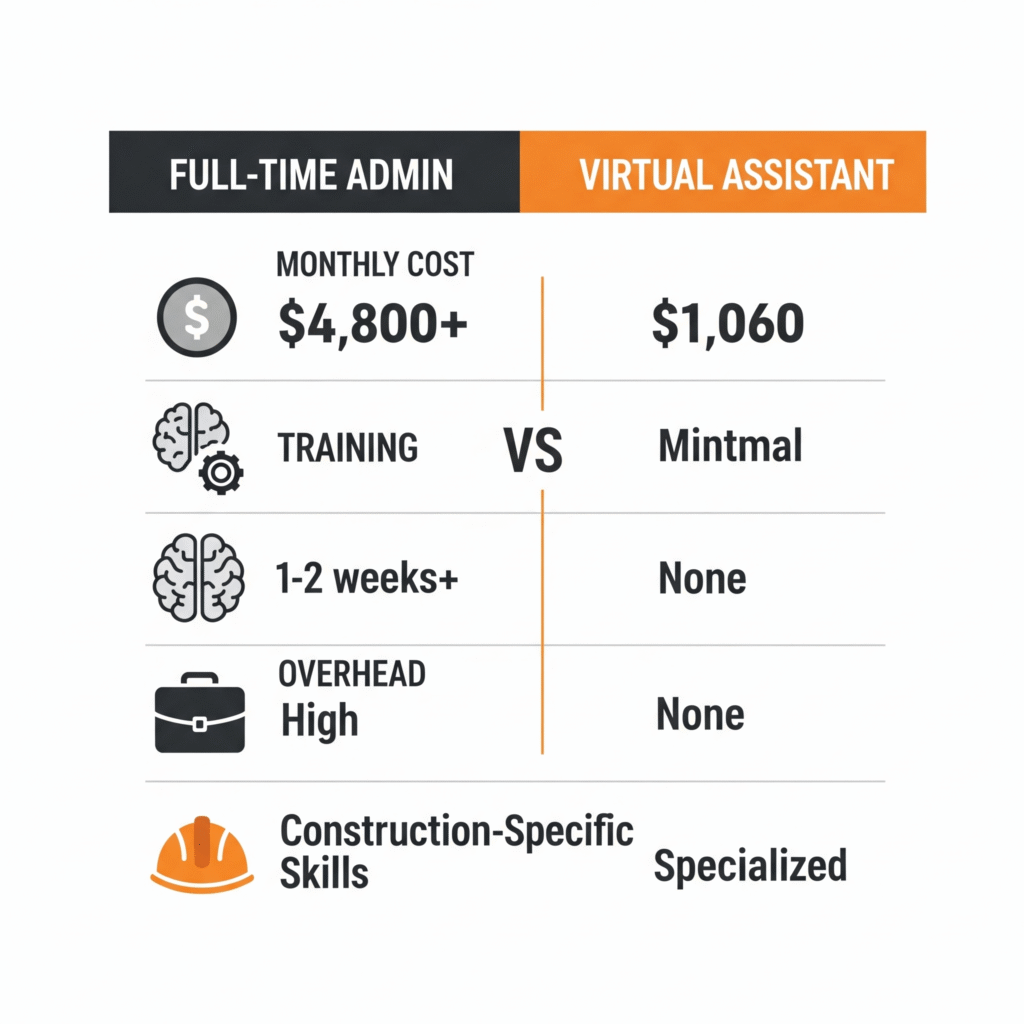
    ExpenseMonthly Estimate
    Base Salary ($40–55k/year)$3,750
    Payroll Taxes (15%)$560
    Health Benefits$400–600
    Office Setup & Software$150–300
    PTO / Sick DaysVariable
    Total Monthly Cost$4,800–5,200+

    Beyond the money, you’ll also spend time training, managing, and supervising daily tasks, especially if they’re new to construction workflows.


    Option 2: Hiring a Virtual Construction Admin Assistant

    A remote admin assistant who specializes in construction tasks (like the ones Citrus provides) works full-time, but without the full-time overhead.

    Here’s a typical cost breakdown:

    ExpenseMonthly Estimate
    Hourly Rate ($6/hr avg)$960 (40 hrs/week)
    Service Fee/Admin Support$100
    Benefits, PTO, Equipment$0
    Training TimeMinimal (pre-trained)
    Total Monthly Cost$1,060

    And the best part? You only pay for the time and tasks you need—no idle hours, no office space, no extra payroll.


    Side-by-Side Comparison: Virtual Assistant vs. Full-Time Admin

    Full-Time AdminVirtual Assistant
    Monthly Cost$4,800–5,200+$1,060
    Training Required1–2 weeks+Minimal (pre-trained)
    Time Zone FlexibilityLimitedFlexible
    Construction-Specific TasksVaries by candidateSpecialized VA
    Coverage During Sick DaysYou manage itFully covered
    Tools & SetupYou provideAlready equipped
    HR/Legal OverheadHighNone

    What You Can Expect a VA to Handle Daily

    Even though they’re remote, VAs can take full ownership of:

    • Inbound/outbound calls
    • Subcontractor communication
    • Calendar and crew scheduling
    • COI and document tracking
    • Inbox management
    • Material order follow-ups
    • Client proposal emails
    • Invoice prep and payment logs

    They’re not “just an assistant”—they become your remote operations support.


    Why Virtual Assistants Make Sense for Growing Construction Teams

    If you’re not ready to commit to a $50K+ annual hire, or if you’ve been drowning in admin while trying to manage jobs, here’s what makes VAs a smart choice:

    • Lower cost without sacrificing quality
    • Scalable support as your workload grows
    • Minimal training needed—many VAs are pre-trained for construction
    • Better work-life balance for you and your team
    • No hiring or firing stress

    You get back control of your time—without blowing your margins.


    When a Full-Time Admin Might Make Sense

    • You have 10+ employees and a physical office
    • You need someone onsite for in-person paperwork or front-desk duties
    • You’re looking for someone to eventually grow into an operations manager role

    But for 80% of construction companies under 10 people? A VA is all you need (and more).


    Final Word: Spend Less, Get More Done

    You don’t need to pay $60K+ a year to stay organized.

    For a fraction of the cost, a construction-focused virtual assistant can take over your admin work, reduce stress, and keep your business moving.

    Compare the numbers. Choose flexibility. And start scaling smarter—with just one assistant.

  • Booking Calls, Managing Calendars: Let Your VA Do It

    Booking Calls, Managing Calendars: Let Your VA Do It

    VIRTUAL ASSISTANT ON HEADSET, SCHEDULING APPOINTMENTS ON COMPUTER

    You’ve got leads coming in, clients to follow up with, and projects to juggle. Still, your day keeps getting derailed by one thing: calendar chaos.
    Whether it’s double-booked calls, last-minute reschedules, or forgotten meetings, managing your own calendar can quickly turn into a full-time job. And let’s be honest, you didn’t start your business to spend all day sending calendar invites.
    That’s where a virtual assistant (VA) steps in. They take over your scheduling, coordinate calls, and protect your time. As a result, you can actually focus on growing the business.


    Why Booking and Calendar Management Is More Than Just Admin Work

    It might seem simple: send a link, confirm a time, and move on. However, in reality, scheduling is one of the most distracting and detail-heavy parts of your workflow.
    Here’s what it really includes:

    • Coordinating across multiple time zones
    • Confirming availability for multiple people
    • Rescheduling missed or canceled appointments
    • Sending calendar invites + reminders
    • Managing scheduling tools like Calendly or Google Calendar
    • Adding notes or context for each meeting

    Miss a detail and you risk no-shows, poor first impressions, or lost opportunities. This is why many business owners delegate the task to trained virtual assistants who manage it professionally.


    What a VA Can Do to Simplify Your Scheduling Life

    A dedicated VA can take full ownership of your scheduling process, including:

    Managing Your Calendar Daily

    • Accepting invites, declining conflicts, and keeping your schedule clean
    • Blocking time for deep work, client calls, team meetings, and breaks

    Booking and Confirming Appointments

    • Handling back-and-forth emails with clients or prospects to lock in times
    • Confirming appointments 24 hours in advance to reduce no-shows

    Coordinating With Teams or Clients

    • Aligning calendars between multiple parties for smooth scheduling
    • Organizing internal meetings and adding agendas or Zoom links

    Handling Reschedules Without Stress

    • Quickly finding alternate slots and sending new invites with all details
    • Notifying everyone involved to avoid confusion

    Keeping You on Time

    • Sending you a daily agenda so you know what’s coming
    • Giving reminders before each meeting so you show up prepared

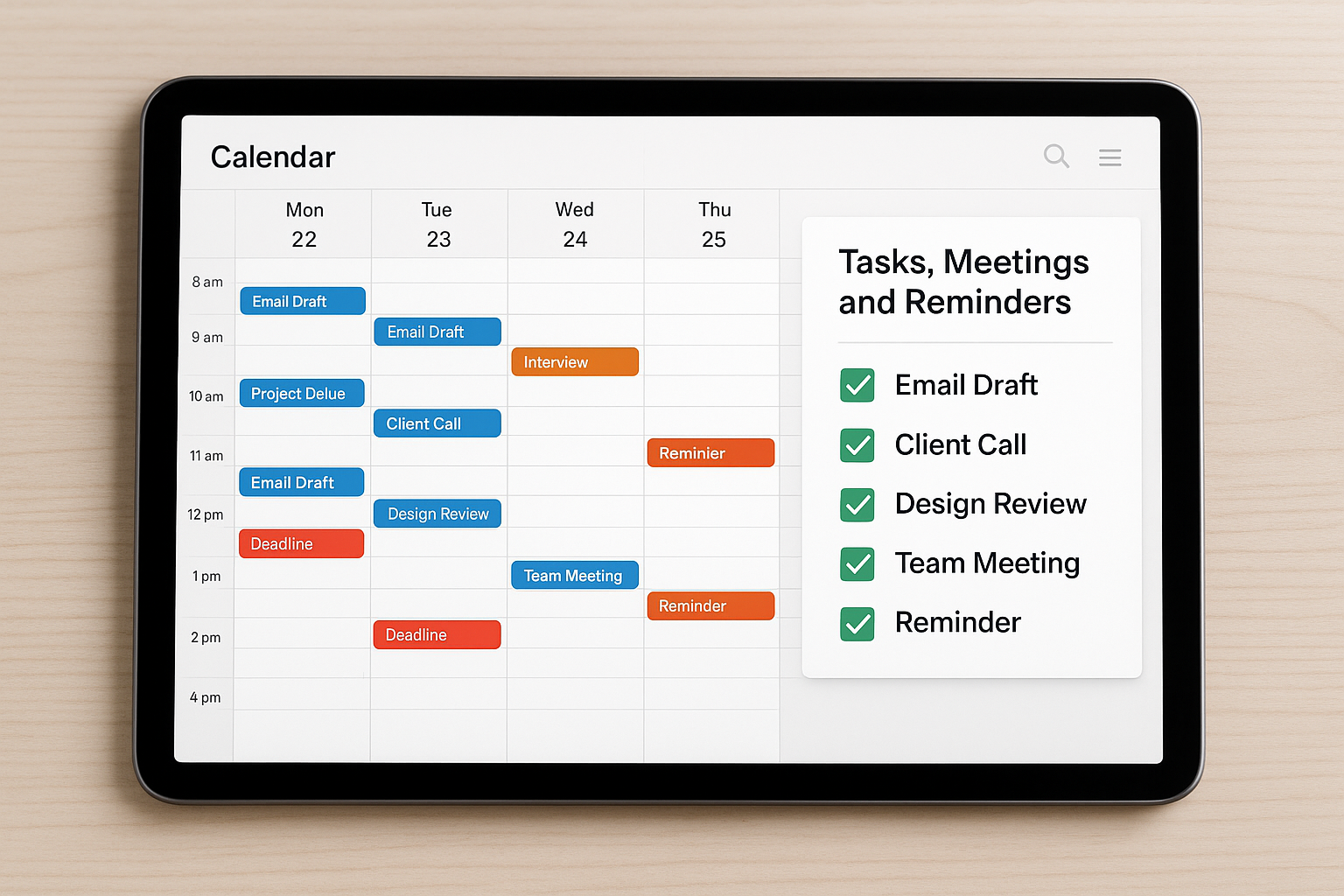
    CALENDAR OPEN ON SCREEN WITH TASKS, MEETINGS, AND REMINDERS

    Who Benefits Most From Calendar Delegation?

    If you answer “yes” to any of these, you’re ready to delegate:

    • Missing or rescheduling more than one meeting per week
    • Dreading the daily calendar check
    • Seeing your inbox filled with “Does this time work?” emails
    • Spending more time coordinating calls than closing deals

    No matter if you run a construction firm, an insurance agency, or a growing service business, your time is your most valuable asset. Managing your calendar is not the best way to use it.


    Behind the Scenes: How a VA Takes Over Scheduling

    Here’s how a VA-run calendar typically works:

    1. You set preferences (available hours, buffer times, call types)
    2. Your VA syncs with your tools (Google Calendar, Outlook, Calendly, Zoom, etc.)
    3. They manage all incoming requests
    4. They coordinate with leads or teams to confirm times
    5. You get a clean, updated calendar and daily brief

    And that’s it. You stop thinking about time management because someone else already has.


    Why Small Business Owners Love Delegating Calendar Management

    ✅ You gain hours back in your day
    No more juggling time zones or playing email tag.

    ✅ Fewer interruptions
    Your VA protects your schedule and builds in deep focus blocks.

    ✅ More professional experience
    Clients and leads get timely, organized communication.

    ✅ Zero no-show surprises
    With reminders and confirmations built in, people actually show up.

    ✅ You feel in control again
    You always know what’s coming without scrambling or reacting.


    What Tools Can a VA Use to Make This Seamless?

    A professional VA will work with whatever tools you prefer or help you optimize them. Popular options include:

    • Google Calendar / Microsoft Outlook
    • Calendly / Acuity
    • Zoom / Google Meet / Teams
    • Slack / Email / Text for appointment updates

    They can also set up recurring meetings, reminders, and CRM integrations when needed.


    Common Myths About Delegating Your Calendar

    “But I need to approve every call.”
    You still can. Your VA can run appointments by you first or follow rules you set.

    “It’s too personal to hand off.”
    Your VA works under your preferences and approval flow. Nothing feels out of your control.

    “Won’t people get confused?”
    They won’t. In fact, communication becomes clearer when your assistant handles it promptly and professionally.


    5 Quick Signs You’re Ready for a Scheduling VA

    • Double-booking yourself more than once this month
    • Losing time managing reschedules
    • Inbox filled with back-and-forth scheduling emails
    • Team members confused about meeting times
    • Never having enough time to focus

    If this sounds familiar, it’s time to hand off the calendar.


    Take Calendar Chaos Off Your Plate

    You’ve got better things to do than scheduling calls and managing invites. Let a VA take the wheel, protect your time, and make your day run smoother than ever.
    Because your calendar should serve your business, not sabotage it.