
If you run a construction company, you’ve definitely dealt with Certificates of Insurance (COIs). And if you’re still managing them manually, there’s a good chance you’re wasting hours every week chasing paperwork and scrambling before inspections.

But what exactly is COI tracking? And why is it eating up so much of your time?
Let’s break it down in plain terms—and show you how to offload it without dropping the ball.
What Is a Certificate of Insurance (COI)?
A COI is a one-page summary that proves a subcontractor or vendor has active insurance coverage. It shows key details like:
- Policyholder name
- Insurance company
- Policy number
- Coverage types (general liability, workers’ comp, auto, etc.)
- Coverage limits
- Policy effective and expiration dates
Clients and general contractors require them to ensure everyone working on site is properly insured.
What Is COI Tracking?
COI tracking is the ongoing process of:
- Collecting COIs from subcontractors, vendors, and other third parties
- Verifying coverage levels meet your project/client requirements
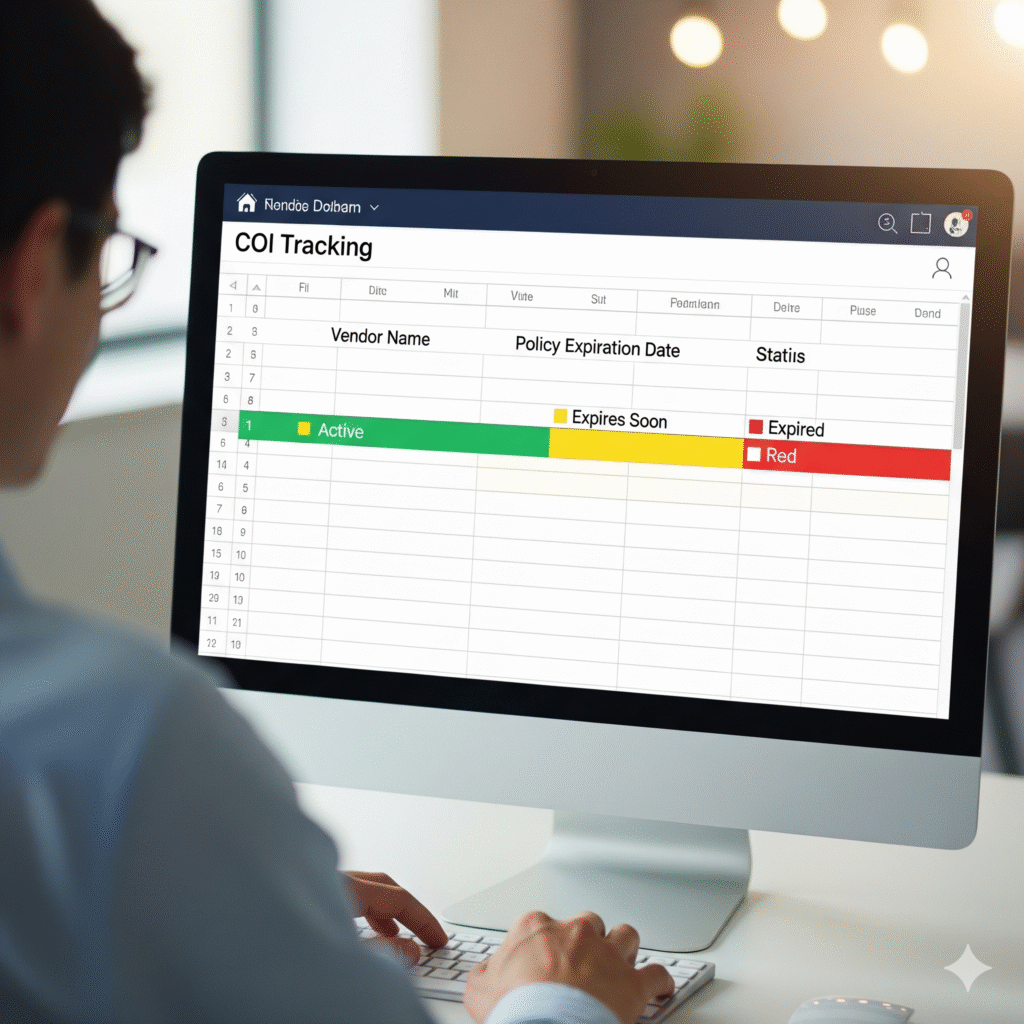
- Logging expiration dates and policy details in a tracker or spreadsheet
- Following up for renewals before a policy expires
- Ensuring no one is working on site with an expired or missing COI
Done right, COI tracking protects you from massive liability. Done wrong—or neglected—it opens you up to risk, fines, or even project shutdowns.
Why You’re Losing Time (and Money) on COI Tracking
Let’s say you’re handling COIs yourself or relying on your site foreman to manage them. Here’s what likely happens:
1. You chase documents piecemeal
You’re texting or emailing subs for missing COIs days before work starts—or worse, while the job is already underway.
2. You forget renewal dates
If you’re not tracking expiration dates, subs could be uninsured without you knowing it.
3. You verify details manually
Every COI has to be checked—line by line—to make sure coverage limits meet project requirements. That takes time.
4. You store files inconsistently
Some are on your phone, some in email threads, some on your desktop. When an auditor or GC asks for proof, it’s a scramble.
Real Risks of Poor COI Tracking
- Working with uninsured subcontractors
- Delays from failed inspections or audits
- Rejected claims because of missing coverage
- Client trust issues and lost contracts
- Extra admin time every time a project starts

This is one of those back-office tasks that isn’t urgent—until it becomes a big problem.
How a Virtual Assistant Handles COI Tracking for You
A trained virtual assistant (VA) can take full control of your COI process. Here’s what they do:
✅ Collect COIs from every new subcontractor or vendor
They request and organize the documents before the job starts.
✅ Track expiration dates in a shared system
They use a spreadsheet or software to set up reminders 30 days before expiration.
✅ Verify insurance limits match your project/client requirements
No more guessing or missing details—your VA reviews every line item.
✅ Follow up for renewals automatically
They reach out to vendors for updated COIs so you’re never caught off guard.
✅ Keep everything stored in one clean, accessible folder
Whether it’s Google Drive or Dropbox, your documents are always ready when needed.
What This Saves You (Every Single Week)
- 3–5 hours of admin follow-up
- The panic of missing documentation during a surprise audit
- Liability from uninsured subs on site
- Missed jobs because of delayed compliance
- The mental load of having to “remember everything”
All gone. All delegated.
Signs It’s Time to Hand Off COI Tracking
- You’re manually emailing subs for COIs before every job
- You’ve had at least one expire without realizing it
- You can’t find half your COIs without digging
- You’re not sure if coverage limits are compliant
- You’ve lost time or trust over document issues
If any of these hit home, it’s time to delegate the task entirely.
Get Out of the COI Admin Loop
You don’t need to handle this process yourself. And you definitely don’t need to hire a full-time office admin just for insurance paperwork.
A remote assistant trained in construction admin can manage your COIs with precision—so you never have to think about it again.
Because the only thing worse than chasing paperwork… is facing a lawsuit for not having it.
Leave a Reply